
Most roof leaks start as small, boring problems: a lifted shingle, a dried-out sealant joint, a gutter packed with leaves. Northern Virginia homes deal with humid summers, heavy rain, wind from passing storms and the occasional winter freeze, so a short routine twice a year pays off. This checklist is designed so you can do nearly all of it from the ground, a ladder at the eave, or the attic hatch. Please stay off the roof surface itself.
Twice a year: spring and fall
Pick a dry day and walk around the house first. Binoculars help.
- Shingles. Look for curled, cracked, missing or visibly discolored shingles. Dark streaks on the lower slopes are often algae and mostly cosmetic. Bare patches or granules piled below a downspout deserve a closer look.
- Flashing. The metal around chimneys, skylights, vents and where a roof meets a wall is where leaks most often begin. Look for gaps, rust, lifted edges or old sealant that has cracked.
- Gutters and downspouts. Clear leaves and debris so water leaves the roof edge instead of backing up under the shingles. Check that downspouts send water well away from the foundation.
- Roof edge and fascia. Soft, stained or peeling fascia boards can mean water is getting behind the gutter.
- Trees. Trim limbs that overhang the roof. Falling branches and constant leaf litter are hard on shingles.
From the attic
Take a flashlight into the attic on a bright day and again after a heavy rain.
- Look for daylight coming through the roof deck.
- Check for dark stains, damp insulation or a musty smell, especially around the chimney and plumbing vents.
- Make sure bath fans and dryer vents exhaust outdoors, not into the attic.
- Check that insulation is not blocking the soffit vents.
A little moisture and mold on the underside of the deck can point to poor ventilation rather than a leak, and both are worth fixing.
After every major storm
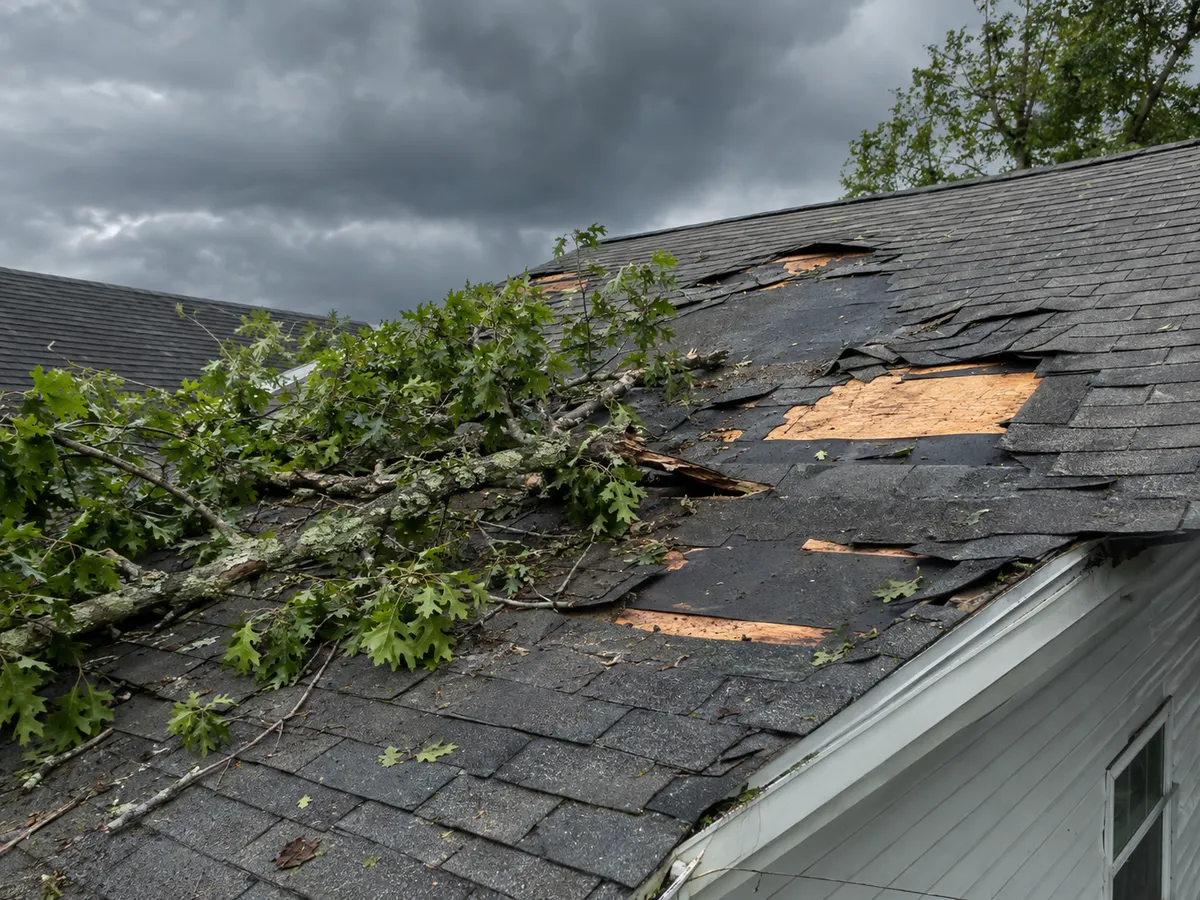
After strong wind, hail or a fallen limb, do a quick walk-around. Look for shingles in the yard, dented gutters or vents, and exposed underlayment. If you see damage, take dated photos from the ground and read our guide to storm damage and insurance claim steps. Small repairs done quickly are cheaper than water damage inside the home.
When to call a roofer
Call for a professional roof inspection if you notice any of these:
- Active leaks or ceiling stains
- Many missing, cracked or curling shingles
- Sagging areas on the roof
- A roof that is approaching 20 years old, or that you cannot date
- Damage after a storm, especially if you may file an insurance claim
For a few damaged shingles or failed flashing, roof repair is often enough. When repairs keep adding up, the signs you need a new roof can help you decide whether replacement makes more sense.
Safety first
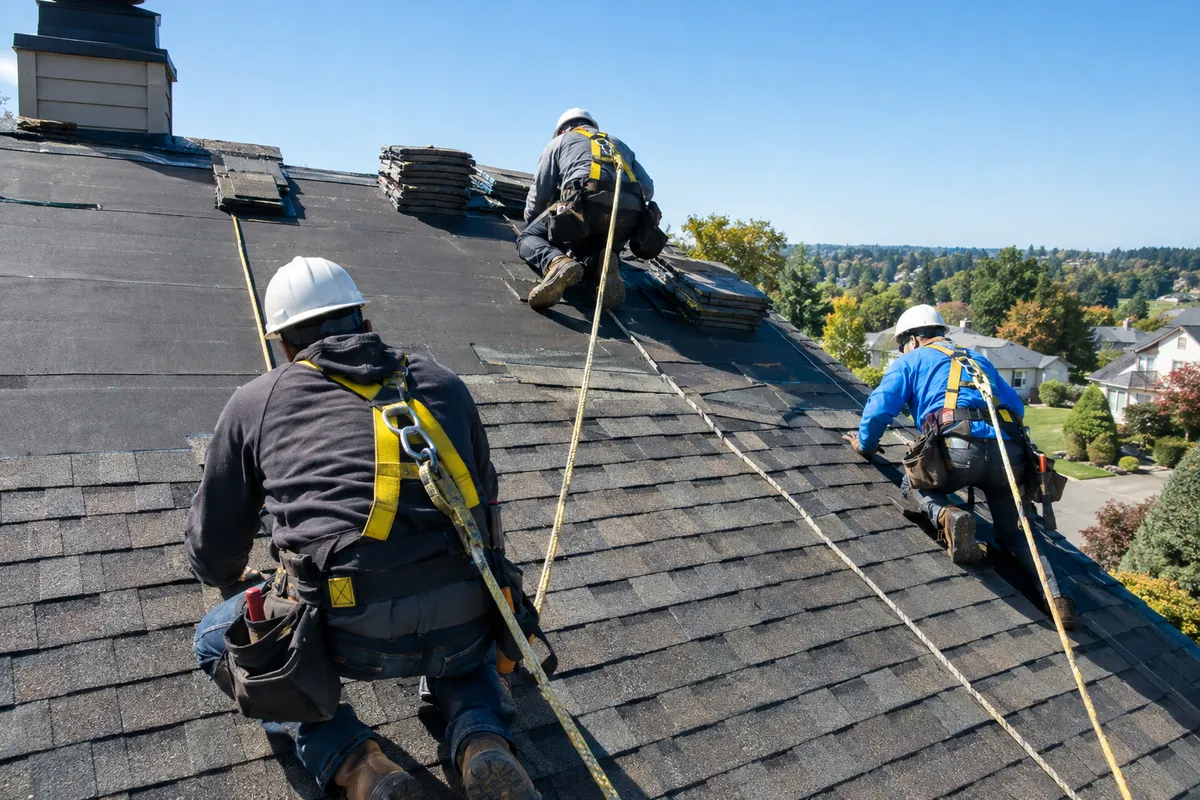
Roofs are slippery and falls are serious. Do not climb onto the roof to inspect or clear debris. Use binoculars, a camera zoom or a drone-free approach from the ground, and let a trained crew with fall protection handle anything on the surface.
FAQ
How often should I have my roof professionally inspected in Northern Virginia?
A good rule is once a year and after any major storm. A yearly look catches flashing and sealant problems before they let water in, and gives you a record of the roof's condition if you ever need to file an insurance claim.
Can I clean the gutters myself?
Yes, if you are comfortable on a stable ladder with someone holding it. If your gutters are high, your roof is steep or you are not sure, hire it out. Falls from ladders are a common cause of injury.
Is moss or algae on my roof a problem?
Dark streaks are usually algae and mostly cosmetic. Moss is different because it holds moisture against the shingles and can lift them. If you see thick moss, have it assessed.
Where do you service homes for roof maintenance and inspections?
We serve homeowners across Northern Virginia, including Fairfax, Reston, Arlington and Leesburg. Call or send a request for a free inspection.