
A leaking flat roof needs two things done in the right order: limit the water damage inside today, then have the leak traced to its real source and repaired with the same material the roof is made of. Patching the stain you can see rarely works, because water on a flat roof travels before it drips. If you are in Fairfax, Arlington, McLean or anywhere else in Northern Virginia, we start with a free, photo-documented inspection and give you a written proposal, so you know what is wrong and what each repair option involves before any work begins.
This guide covers why flat roofs leak, how to protect your home in the meantime, what a proper repair looks like on each type of roof, and how to tell a repair from a replacement.
TL;DR
- Flat roofs leak because water drains slowly and finds cracks, seams and poorly sealed flashing. The drip inside is often some distance from the hole outside.
- Today: move belongings, catch drips, let wet ceilings dry, and stay off the roof if the surface is wet or the edges are unprotected.
- A lasting repair must match your membrane (the waterproof top layer). The wrong patch material can fail within weeks.
- Leaks in several spots, wet insulation, or standing water that never goes away usually point to replacement, not another patch.
- We offer free inspections and written proposals with good, better and best options across Northern Virginia.
Table of Contents
- Why flat roofs leak
- Signs your flat roof is leaking
- What to do today, before the repair
- How the source of a leak is found
- What a proper repair looks like by roof type
- What affects the cost of flat roof repair
- Repair or replace: how to decide
- Keeping a flat roof from leaking again
- Our approach to flat roof repair
- Get your flat roof inspected
- FAQ
- Sources
Why flat roofs leak
A flat roof is not truly flat. It has a slight slope toward drains, scuppers (openings in the parapet wall that let water out) or gutters. When that system works, water leaves quickly. When it does not, water sits, and sitting water finds weak points.
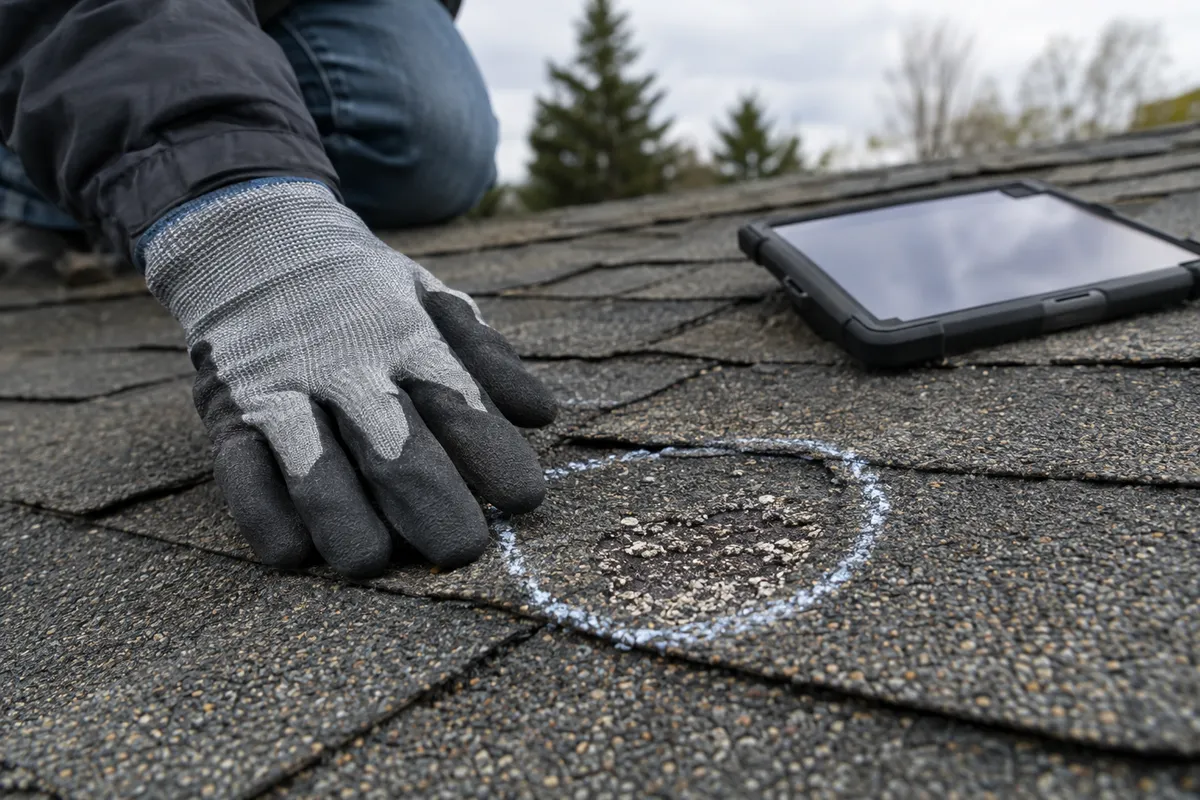
According to a state disaster-preparedness guide on membrane and built-up roofs, low-slope roofs leak because water drains slowly and works through cracks and splits that form as the roof cover expands and contracts at a different rate than the deck beneath it. The same guide lists what to look for: cracks, holes, gaps, buckling, ponding areas, missing granules or gravel, and unsealed flashing around pipes, vents, walls and roof edges.
In practice, most leaks start in one of these places:
- Seams. Where sheets of membrane join, adhesive or welds can open as the roof ages.
- Flashing. This is the strip of material sealing the roof to walls, chimneys, vents and skylights. It is the most common failure point because it is where two materials meet and move differently.
- Penetrations. Plumbing vents, HVAC curbs and pipe boots all cut through the membrane.
- Drains and scuppers. Clogged outlets cause ponding. The SPRI/NRCA single-ply roofing manual calls excessive ponding from clogged drains and scuppers a frequent cause of leakage and even collapse.
- Blisters, splits and punctures. Foot traffic, fallen branches and ordinary aging all take a toll.
Northern Virginia adds its own stress: summer heat, freeze-thaw cycles in winter and fast, heavy storms. If you are not sure whether what you see is a roof problem or a smaller one, our post on how to spot common roofing problems early shows the warning signs.
Signs your flat roof is leaking
Some signs are obvious. Others show up weeks before a drip.
- Brown or yellow stains on a ceiling, often spreading in a ring.
- Paint that bubbles or peels near the ceiling or an exterior wall.
- A ceiling that sags or bulges, which means water is pooled above it.
- A musty smell in a room under the roof.
- Water standing on the roof more than a day or two after rain.
- Visible cracks, lifted seams, blisters or bare patches on the surface.
Wet insulation is the hidden problem. The membrane may look fine while the material under it holds water, which is why a surface glance is not enough to judge a roof.
What to do today, before the repair
Your goal is to protect the home, not to fix the roof in the rain. Safe steps you can take from inside:
- Move furniture and electronics away from the stain, and cover what you cannot move.
- Catch the drip with a bucket. If the ceiling is bulging, a small relief hole over a bucket lets trapped water out in a controlled way, as the wet-weather repair guidance describes.
- Open and dry the area. Run fans and a dehumidifier. The same source cites the EPA’s 24 to 48 hour window for drying wet materials to prevent mold.
- Photograph everything: stains, damage, the date and weather. Photos help if the leak connects to a storm and an insurance claim. Our guide on what to do first after storm damage walks through that process.
- Call for an inspection while the leak is fresh. Water paths are easiest to trace soon after rain.
If the leak followed a storm and water is entering fast, our first 48 hours checklist covers the immediate priorities, and our storm damage restoration team handles emergency situations.
Stay off the roof in bad conditions
A wet membrane is slippery, and flat roofs often have unprotected edges. Federal rules under OSHA 1926.501(b)(10) require fall protection for workers on low-slope roofs with unprotected edges 6 feet or more above the level below, as the same wet-weather guidance notes. The rule is written for workers, but the risk is the same for anyone who steps onto a wet roof. Also be careful around drains: the SPRI/NRCA manual cautions that clearing debris from a drain can create a dangerous suction vortex.

Temporary covers
A temporary patch should only hold until a proper repair. Two points matter. First, never drive screws through the membrane to hold a tarp, since every screw is a new hole. Second, match the product to the roof: one roofing resource points out that a manufacturer’s own data sheet for a common asphalt wet-patch cement says it is not recommended over gravel, rubber or PVC roofing. A product that works on one roof can fail on another, which is the central reason flat roof repair is not one-size-fits-all.

How the source of a leak is found
The stain on your ceiling marks where water came out, not where it got in. On a flat roof, water can run along the deck, a joist or the underside of the insulation for several feet.
A careful search follows a sequence:
- Map the inside. Measure the stain’s distance from two walls so you can locate the same spot on the roof.
- Follow the water trail in the attic or ceiling cavity to the highest wet point.
- Inspect the roof near that spot. A flat roof leak guide suggests checking seams, penetrations, flashing laps and blisters within about 10 feet uphill of the interior stain.
- Check drains and low spots, and feel for soft areas under the surface, which indicate water damage, as This Old House advises for flat and low-pitched roofs.
- Test if needed. When the leak is hard to find, water is run over different sections with a garden hose while someone inside watches for signs. Working one section at a time is what isolates the source.
This is where an inspection pays off. Our inspections are photo-documented, so you see the flashing, seam or drain we are talking about instead of taking it on trust. You can read more on our roof inspection page.
What a proper repair looks like by roof type
There is no single flat roof repair. The membrane decides the method.
| Roof type | Typical repair approach |
|---|---|
| EPDM (rubber) | Cleaned surface, primer or contact adhesive, and a rubber patch or cover tape, with edges sealed |
| TPO or PVC (single-ply) | Hot-air welded patch, which fuses the new piece to the old membrane |
| Built-up roofing (BUR) or modified bitumen | Additional plies or a patch set in asphalt cement or heat-applied, matched to the existing layers |
| Metal | Reseal seams and fasteners, replace damaged flashing or panels |
These methods are summarized from guidance on repairs by roof system. For EPDM, This Old House describes a patch that extends well past the damage on all sides, applied to a clean surface with contact cement and sealed at the edges. It also says to replace any wet substrate under the damaged area first. That last detail is the one most often missed. Sealing over wet material traps moisture, and the leak returns.
Where repairs go wrong
- Wrong material. Asphalt cement on a rubber or PVC roof, or silicone caulk smeared over a failing seam.
- Patching only the stain. The real opening is elsewhere, so the leak continues.
- Sealing over wet insulation. The roof looks fixed but the layer beneath keeps rotting.
- Skipping the cause. If a clogged drain created ponding, a patch will not stop the next leak.
- Poor edges. Patches that lift at the corners let water under the repair.
TPO and PVC are the hardest to fix correctly because they need hot-air welding. Family Handyman notes that EPDM is the most approachable of the single-ply roofs, while TPO and PVC are best left to professionals. Work that involves coatings, section replacements or wet insulation also belongs with a contractor who can scan for moisture and stand behind the result.
For most homeowners, the practical answer is simple: have the roof type identified, the leak traced and the repair done on a dry, safe surface. Our roof repair service and flat and low-slope roofing work cover exactly this.
What affects the cost of flat roof repair
We do not publish set prices, because two flat roof leaks with the same stain can need very different work. These are the factors that move the price:
- Membrane type. A welded TPO patch and an EPDM patch use different materials and methods.
- Size and number of damaged areas. One seam is a small job. Several areas suggest a wider problem.
- Wet insulation or deck damage. Removing and replacing saturated material adds labor and materials.
- Access. Rooftop height, equipment and safety setup change the time required.
- Underlying causes. Drainage, flashing or slope problems must be corrected, not just covered.
Online price ranges vary widely by region and roof type, so treat a national average as a rough guide, not a quote. A written proposal based on your actual roof is the number that matters. After a free inspection we give you one with good, better and best options, so you can compare what each level includes.

Repair or replace: how to decide
A repair is the right call when the damage is a single, findable defect and the surrounding membrane and deck are sound and dry. Leaks in multiple places usually signal wear across the whole roof, according to guidance on patch, coat or replace decisions.
Professional standards agree. The NRCA low-slope reroofing guidelines, as reported in Professional Roofing, say re-cover or replacement should be considered when repair costs become excessive, leakage becomes intolerable, or damage reaches structural components or interior finishes and contents. Family Handyman adds that replacement should come sooner for damage in several places, multiple leaks, habitual pooling or impact damage.
Signs that point toward replacement:
- Three or more separate leaks, or leaks that return after repair.
- Wet insulation across a large area.
- Ponding that lasts days after rain even with clear drains.
- Widespread blistering, cracking or open seams.
- A soft or sagging deck.
The condition of the existing roof also determines whether a new layer can go over it. NRCA reroofing guidelines rule out a re-cover where there is wet insulation, a damaged deck, extensive blistering or buckling, building-code noncompliance, or perimeter conditions that cannot provide required flashing heights. The Building America Solution Center recommends removing the old membrane, inspecting and correcting framing and decking, and sloping the roof toward drains with tapered insulation when reroofing. It treats pooling water as a sign the roof needs more slope and drainage, not just a new surface.
For a fuller look at the decision, read our comparison of roof replacement vs. roof repair and our guide to signs you need a new roof in Northern Virginia. If you decide on a new roof, our roof replacement and metal roofing pages explain the options.
Keeping a flat roof from leaking again
Most repeat leaks trace back to drainage and neglect. A simple routine helps:
- Clear drains, scuppers and gutters, especially after autumn leaf fall. Our gutter installation and repair team can help if outlets are damaged or undersized.
- Look at the roof from a safe vantage point after major storms.
- Keep foot traffic and equipment off the membrane.
- Trim branches that overhang the roof.
- Schedule an inspection each year, and before winter.
Our posts on extending the lifespan of your roof and signs your roof needs repair before winter give a seasonal checklist.
Our approach to flat roof repair
We have seen the same pattern on flat roofs again and again: a leak is treated as a stain to cover, when it is a path to follow. That is why every project we take on starts with a free, photo-documented inspection and a written proposal with good, better and best options.
The good option addresses the immediate problem. The better and best options go further into the causes, such as flashing, drainage and the condition of the layers below. You see what each one covers and decide with the full picture.
Once you approve the work, we document it before, during and after. Changes are put in writing as change orders, so there are no surprises. At closeout you receive lien waivers and your warranty paperwork.
A flat roof repair done once, with the right material and the right diagnosis, is the one you stop thinking about.
Esteam
Get your flat roof inspected
If your flat roof is leaking, ponding or showing stains inside, we can inspect it for free and give you a written proposal. We serve homeowners in Fairfax, Arlington, McLean, Oakton, North Springfield, Springfield, Centreville and across Fairfax County, handling repairs, storm damage restoration and full replacements. Start with our flat and low-slope roofing page, or see examples of our work in our project photos.

To book your free inspection, visit Esteam Roofer.
FAQ
Why is my flat roof leaking when there is no visible hole?
Water often enters at a seam, flashing joint or penetration and travels along the deck before it appears inside. Slow drainage and ponding make this worse. An inspection follows the water trail back to the highest wet point to find the real opening.
Can I repair a flat roof leak in the rain?
A proper repair needs a clean, dry surface, and a wet roof is a fall risk. In wet weather, focus on protecting the inside of your home with buckets and drying fans, then schedule the repair. Temporary covers should be weighted, never screwed through the membrane.
How long does a flat roof repair last?
That depends on the membrane, its age and whether the cause was corrected. A matched repair on sound, dry material can last for years. Repeated leaks, wet insulation or ongoing ponding mean the roof is wearing out as a whole, and a written proposal can compare repair and replacement.
Can a new roof go over my existing flat roof?
Sometimes, but not if the insulation is wet, the deck is damaged, the surface is badly blistered or buckled, or code requirements such as flashing heights cannot be met. An inspection shows whether a re-cover is possible or whether the old layers must come off.
How much does flat roof repair cost?
It depends on the roof type, the size of the damage, access, and whether wet insulation must be replaced. We give you a written proposal after a free inspection, with good, better and best options, so the figure is based on your roof and not a national average.
Sources
- Information About Membrane & Built-up Roofs
- How to Repair a Roof Leak, This Old House
- How To Properly Patch and Maintain a Leaking Rubber Roof, This Old House
- Flat Roof Leak Repair: Find It, Fix It by System
- Flat Roof Repair in Wet Weather: What Works
- Single Membrane Roof Repair: Patch, Coat or Replace
- Flat Roof Repair and Maintenance, Family Handyman
- SPRI/NRCA Manual of Roof Inspection, Maintenance and Emergency Repair (Single Ply)
- NRCA roofing guidelines on reroofing
- Low-slope reroofing guidelines, Professional Roofing
- Water Managed Roof: Re-roofing and Adding Insulation over Flat Roof, Building America Solution Center