
A flat roof replacement is a full tear-off of the old membrane and any wet insulation, followed by a new waterproof membrane, flashing and drainage details. It is a bigger decision than a repair, and the price depends mostly on roof size, material and how much of the old roof is damaged underneath. In Northern Virginia, we start every project with a free, photo-documented inspection and a written proposal with good, better and best options, so you can compare real numbers for your own roof instead of national averages.
TL;DR
- Nationally, flat roof replacement runs from about $11,311 to $37,709, with a typical homeowner paying around $24,510, according to This Old House’s 2026 pricing guide.
- Material is the biggest lever: for a 2,000 sq ft roof, modified bitumen and built-up roofs sit at the low end, TPO and rubber membranes in the middle, and metal at the top.
- Widespread wet insulation, repeated leaks in the same spots and standing water point toward replacement. A single failed seam or flashing usually points toward repair.
- Insulation upgrades, drainage work, disposal and permits can add to the base price, so ask for them to be itemized.
- Get a written proposal that covers scope, change-order rules, lien waivers and warranty delivery before work starts.
Table of Contents
- How Much Does a Flat Roof Replacement Cost?
- What Pushes the Price Up
- Choosing a Flat Roof Material
- Repair or Replace: How to Tell
- What Happens During a Flat Roof Replacement
- Questions to Settle in the Proposal
- Timing and Planning
- Our Perspective
- Get a Number for Your Roof
- FAQ
- Sources
How Much Does a Flat Roof Replacement Cost?
Published guides give wide ranges because flat roofs vary so much. The This Old House 2026 guide puts replacement between $11,311 and $37,709, with an average of about $24,510. Those are national figures. Prices in Fairfax County and the rest of Northern Virginia depend on your roof’s size, layout, access and condition, which is why a measured, written proposal is the only number worth planning around.
Here is how that works out by roof size. The same guide shows per-square-foot prices for a 2,000 sq ft home, so you can scale them:
| Material | Per sq ft | Total for 2,000 sq ft |
|---|---|---|
| Modified bitumen | $7–$9 | $13,357–$18,018 |
| Built-up roof | $7–$9 | $14,158–$18,911 |
| TPO | $8–$11 | $16,266–$21,405 |
| Rubber membrane (EPDM) | $9–$13 | $18,862–$25,108 |
| Metal | $15–$21 | $29,989–$42,166 |
Source: This Old House, 2026 pricing guide.
Worked example: a 1,000 and a 2,200 square foot roof
Many homeowners ask about these two sizes. Using the per-square-foot ranges above as a rough guide, a 1,000 sq ft TPO roof at $8–$11 would land around $8,000–$11,000, and a 2,200 sq ft rubber membrane roof at $9–$13 around $19,800–$28,600. These are simple multiplications, not quotes. Small roofs often cost more per square foot because tear-off, setup and flashing work do not shrink in proportion, and a roof with several penetrations or tight access will also price higher.
A note on roof area: the footprint of your home and the actual roof surface are not always the same. Parapets, a roof deck over a garage or a porch tie-in all change the measurement. A site visit settles it.

What Pushes the Price Up
The same guide lists the main extras: insulation upgrades, drainage improvements, disposal fees and permitting. It also names difficult access, limited workspace, multi-story buildings and big-city labor rates, noting that roofing labor averages about $75 an hour and that big-city rates can be double rural ones. Northern Virginia is a high-labor-cost market, so expect your proposal to reflect that.
Three things matter most on a typical house:
- What is under the membrane. If insulation has absorbed water, it has to come out. You will not know the extent until the old roof is opened or tested, which is why a written change-order process matters (more on that below).
- Drainage. Flat roofs shed water slowly. If water pools, a new membrane over the same low spots will fail the same way. Tapered insulation, new drains or scuppers (the openings that let water exit through a wall) add cost but protect the investment.
- Material choice. The table above shows the spread. The cheapest material is not always the best value, and the most expensive is not always needed.
Choosing a Flat Roof Material
Flat roofs are not truly flat. They are low-slope, and the membrane is what keeps water out. These are the common residential choices:
- Modified bitumen: asphalt-based sheets, often reinforced, applied in layers or as a single membrane. It sits at the lower end of the price range and is common on smaller roofs and tie-ins.
- Built-up roof (BUR): alternating layers of asphalt and reinforcing fabric, finished with a surface layer. A traditional, layered system priced similarly to modified bitumen.
- TPO: a single-ply white or light-colored membrane with seams that are heat-welded. A mid-priced choice that is popular on newer residential flat roofs.
- Rubber membrane (EPDM): a synthetic rubber sheet, usually black, that comes in large widths so there are fewer seams.
- Metal: standing-seam or other metal panels on low-slope sections where the pitch allows it. It has the highest upfront price in the guide. If you are weighing it for a low-slope area, our metal roofing page explains the options we install.
Pick the material with the roof’s shape, sun exposure, foot traffic and budget in mind. Our flat and low-slope roofing service covers these roof types for Northern Virginia homes, and the good, better and best proposal is built to let you compare them side by side.
Repair or Replace: How to Tell
A repair is the right call when damage is local: a failed seam, a cracked flashing, a clogged drain that has been cleared. Our guide to finding and fixing a flat roof leak walks through that case, and the broader repair versus replacement comparison shows how to weigh the two.
Replacement becomes the sensible option when you see a pattern:
- Leaks keep returning in different places after repairs.
- The membrane is blistering, splitting, shrinking away from edges or cracking widely.
- Water stands on the roof for days after rain.
- Ceiling stains or soft spots suggest the insulation or deck below is wet.
- The roof is at or beyond the usual service life for its material.
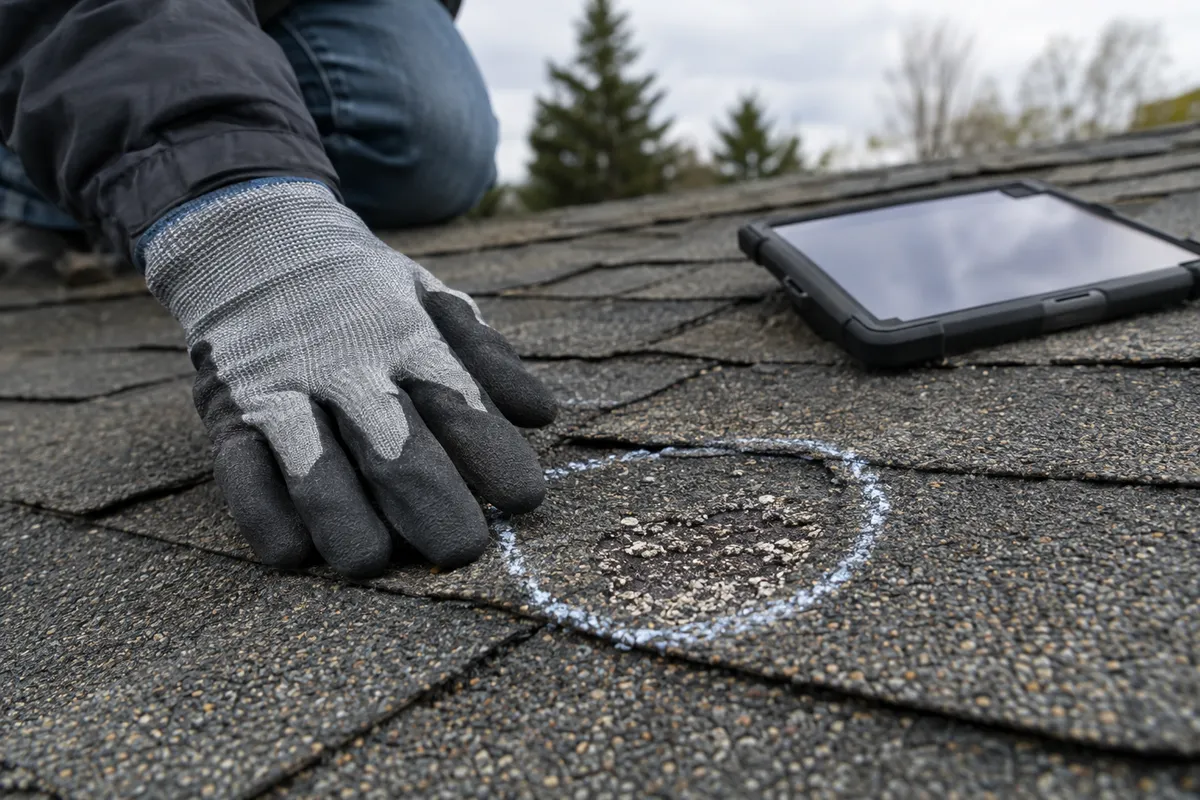
Technical guidance from roofing manufacturers and building-science groups gives service lives for each membrane that vary a lot with installation quality, drainage and maintenance. That is why the roof’s actual condition, not its age alone, should decide. A photo-documented inspection shows you the problem areas so you can see them yourself. Our roof inspection is free.
If you are dealing with a sudden leak after a storm, handle the emergency first. Our guide to what to do first after storm damage covers temporary protection and the insurance steps.
What Happens During a Flat Roof Replacement
The sequence is similar from one roof to the next, though details change with the material.
- Inspection and measurement. The roof is measured and photographed, and the proposal lays out the scope. This is the stage where you decide on the material and any drainage or insulation upgrades.
- Permit. Many jurisdictions require a permit for roof replacement, and rules differ by place. As one example, a San Ramon, California handout requires a building permit when more than 200 sq ft of roof covering is replaced, and schedules an inspection after tear-off to check for dry rot and damaged flashing. Fairfax County and each Northern Virginia town set their own requirements, so confirm yours with the local building office before work begins.
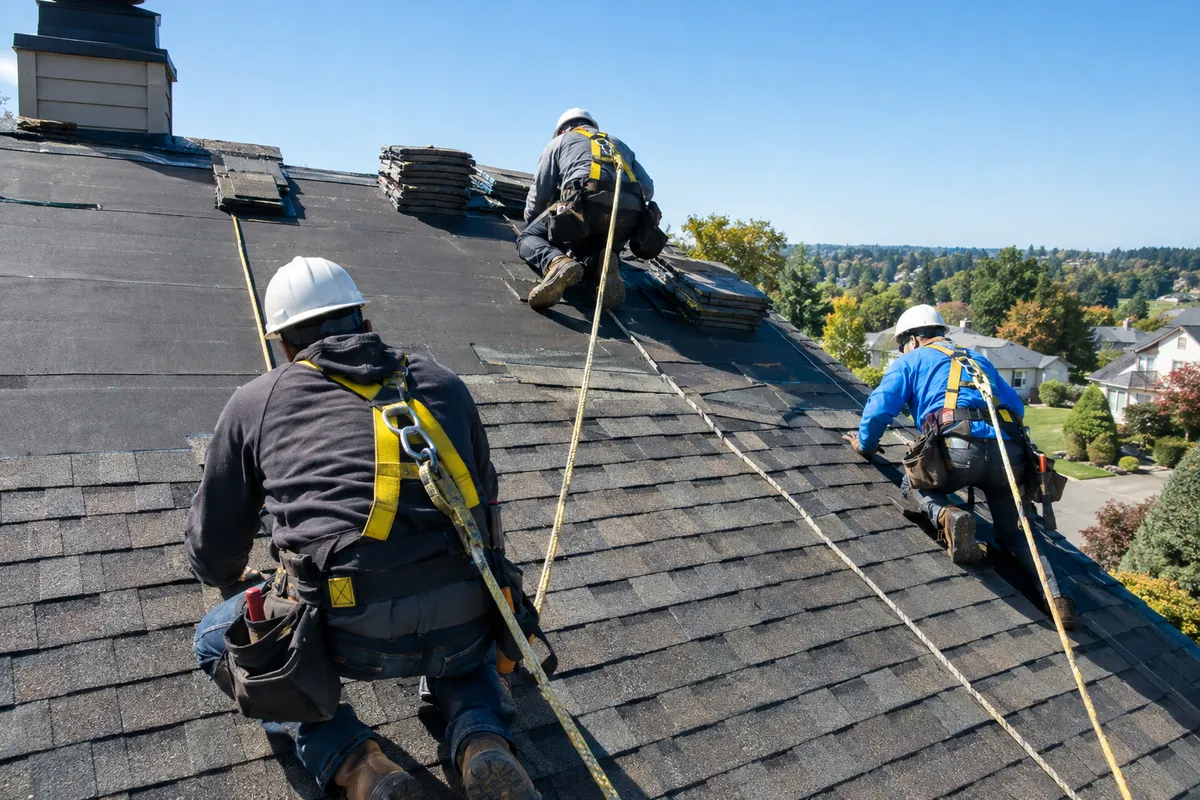
- Tear-off. The old membrane comes off, and wet or damaged insulation is removed down to the deck.
- Deck check and repair. Rotted or damaged decking is replaced so the new roof has a sound base.
- Slope and insulation. Insulation is installed, often tapered to direct water toward drains.
- Membrane installation. The new membrane is adhered, welded or fastened according to the material.
- Flashing and details. Edges, drains, vents and every penetration are flashed and sealed. This is where most leaks start, so it deserves the closest attention.
- Closeout. Final walkthrough, cleanup and paperwork.
Small residential flat roofs commonly take a few days, but weather and the extent of hidden damage change that.
Questions to Settle in the Proposal
Before you sign, read the written proposal for these items:
- Scope: which layers are being removed, what the new system consists of, and how drainage will be handled.
- Material and manufacturer: the exact product, not just the category.
- Permit and disposal: who pulls the permit, and whether disposal is included.
- Hidden damage: what happens if the deck or insulation is worse than expected. The answer should be a written change order with a price before the extra work happens.
- Warranty: what is covered, for how long, and when you receive the paperwork.
- Closeout: lien waivers confirming the contractor has paid suppliers and subcontractors, so no one can claim against your property.
This is how we run our projects. Work is documented before, during and after, changes go in writing as change orders, and closeout includes lien waivers and warranty delivery. When a roofer opens the roof and finds a surprise, you want that surprise explained with photos and priced in writing, not argued about over the phone.
Timing and Planning
Flat roofs do best when installed in dry weather, so spring and fall are popular. Northern Virginia’s summer storms and winter freezes can interrupt work, which is one reason to start planning at the first signs of trouble rather than waiting for a leak. If the roof is already leaking, temporary protection buys time, but it is not a substitute for a plan.

If you are replacing other exterior parts, it often makes sense to coordinate. Gutters and siding meet the roof edge, and doing them in sequence avoids damaging new work. Our services page lists gutter and siding installation and repair alongside roofing. For a broader view of the process, see what to expect when replacing your roof in Fairfax, and for roof care after installation, our tips on extending the lifespan of your roof.
Our Perspective
Most flat roof failures we are asked about do not start with the membrane itself. They start at a drain, a seam, a wall edge or a pipe, and they spread into the insulation. That is why we think the inspection matters more than the sales pitch.
Our approach is simple: photograph the roof, show you what is wrong, and put good, better and best options in writing. You should be able to see why one option costs more than another and decide for yourself.
We also believe a roof replacement should end cleanly. Before, during and after photos, written change orders, lien waivers and warranty delivery are part of how we close a job, because a new roof is only finished when the paperwork is as solid as the work.
Esteam
Get a Number for Your Roof
If you are planning a flat roof replacement in Fairfax, Arlington, McLean, Oakton, Springfield, Centreville or elsewhere in Northern Virginia, start with a free inspection. We photograph the roof, explain what we find and send a written proposal with good, better and best options. You can see the scope of our work on roof replacement and request an instant roof quote when you are ready.

You can also browse roofing project photos from Northern Virginia to see finished work.
FAQ
How long does a flat roof replacement take?
Many residential flat roofs are finished in a few days once work starts. The timeline stretches if the deck needs repair, if insulation is wet throughout, or if rain interrupts the job. Your written proposal should state the expected schedule and how weather delays are handled.
What is the best material for a flat roof replacement?
It depends on the roof. Modified bitumen and built-up systems have the lowest prices in the 2026 guide cited above, TPO and rubber membranes cost more, and metal costs the most. Sun exposure, drainage, foot traffic and budget decide which fits. A written proposal that lays out good, better and best options makes the comparison concrete.
Do I need a permit to replace a flat roof?
Often, yes, but rules vary by locality and by how much roofing or decking is replaced. Confirm the requirement with your county or town building office, and ask your contractor to state in the proposal who obtains the permit.
Can I repair my flat roof instead of replacing it?
Sometimes. Localized damage such as a failed seam or flashing can often be repaired, while widespread wet insulation or repeated leaks across the roof usually call for replacement. A free, photo-documented inspection shows which situation you have. See our roof repair service for smaller fixes.
Sources
- This Old House: How Much Does Flat Roof Replacement Cost? (2026 Pricing)
- City of San Ramon: Roof Permit Requirements