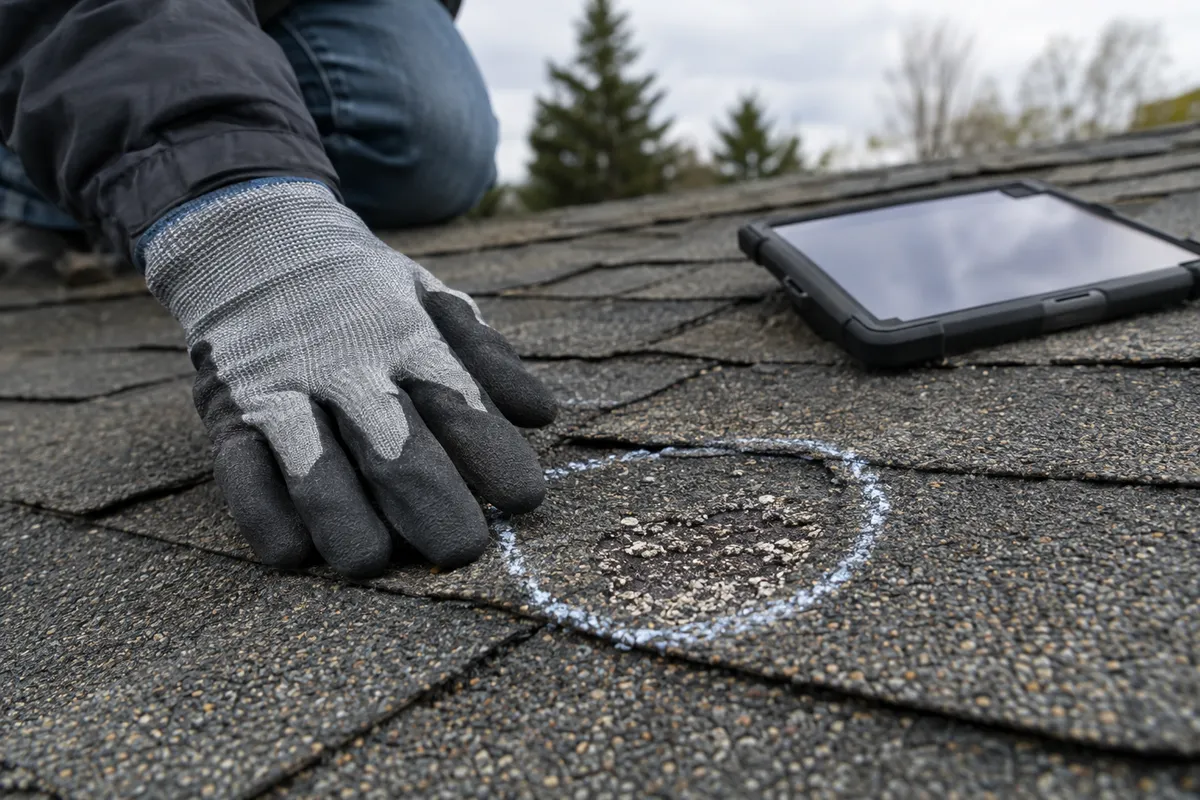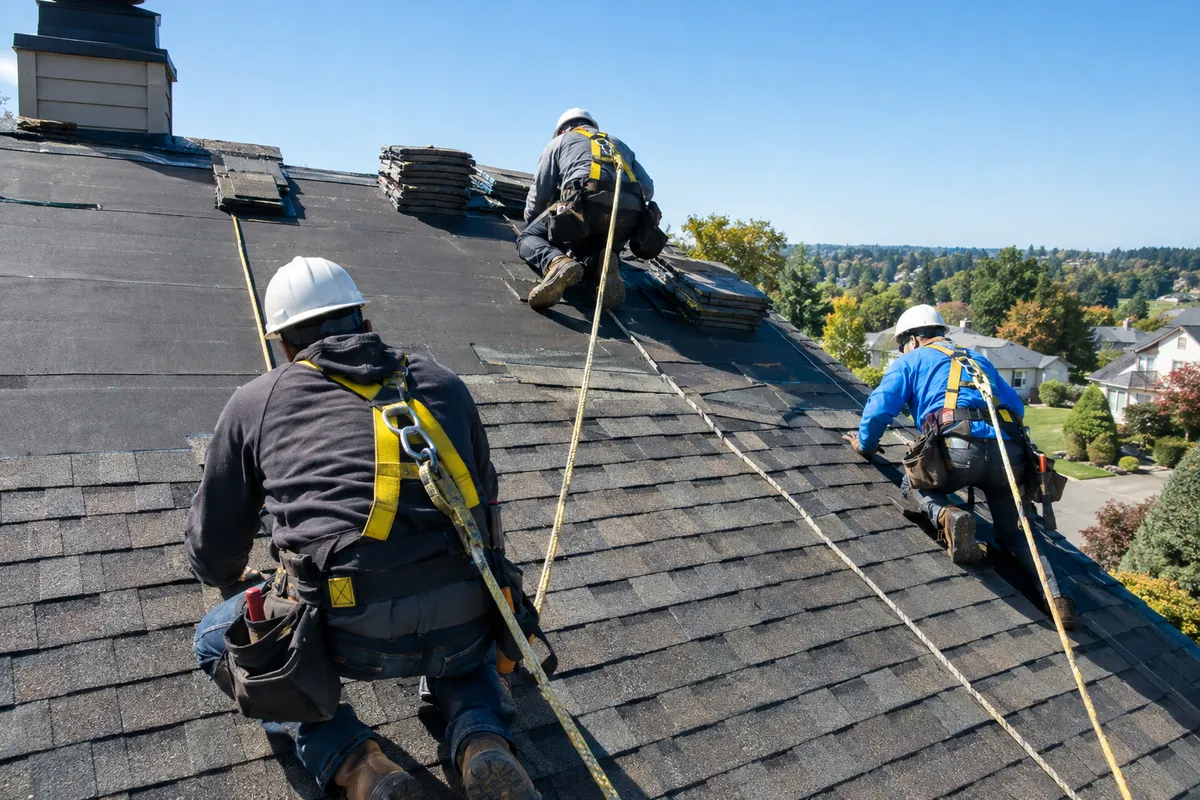

A free roof inspection is worth taking when it ends with photos, a written report and a proposal you can read at your own pace. It is a bad deal when it ends with pressure to sign that day. At Esteam Roofer, every project in Northern Virginia starts with a free, photo-documented inspection and a written proposal with good, better and best options, so you decide with the evidence in your hands.
This guide explains what the visit covers, what you should walk away with, the warning signs officials describe, and how the same inspection helps when you are buying a house or need a roof certification.
TL;DR
- A good free inspection gives you labeled photos, a written list of findings and a written proposal. If you get only a verbal “you need a new roof,” ask for the photos and the report.
- Official consumer warnings focus on unsolicited offers, especially after storms, plus pressure to sign quickly and paperwork that hands your insurance claim to the contractor.
- Expect the visit to take roughly 45 minutes to four hours, depending on roof size, access, materials and whether the attic is checked.
- Buying a house? A home inspection looks at the roof, but it does not give repair costs. A roof-specific inspection and written proposal fill that gap.
- Esteam Roofer offers free, photo-documented inspections across Northern Virginia, with written proposals and documented closeout.
Table of Contents
- What a free roof inspection should include
- What you should have in hand afterward
- Why contractors offer free inspections
- Warning signs: how to tell a trustworthy offer from a sales trap
- Prepare for the visit
- Buying a house: the pre-purchase roof inspection
- What happens after the inspection
- Promo: a free inspection for your Northern Virginia home
- Our perspective
- FAQ
- Sources
What a free roof inspection should include
A roof inspection is a visual check of the roof surface, the flashing (the metal strips that seal joints around chimneys, vents and walls), the gutters and, where possible, the attic. The goal is to find damage or wear while it is still a repair, not a replacement.
A complete visit usually covers:
- Shingles or roofing surface: cracked, curling, missing or worn areas, and granule loss.
- Flashing and penetrations: chimneys, skylights, plumbing vents and wall joints, where many leaks start.
- Gutters and drainage: whether water leaves the roof edge and moves away from the house.
- Roof deck and attic: staining, damp insulation or daylight where it should not be. This Old House notes that whether the attic is checked is one of the factors that changes how long an inspection takes.
- Interior signs: ceiling stains or peeling paint that point to a roof source.
The length of the visit depends on the roof. According to This Old House, an inspection can take anywhere from 45 minutes to four hours depending on size, accessibility, materials and attic access. A simple single-story ranch is at the short end. A steep, multi-level house with several valleys and a chimney takes longer.
What you should have in hand afterward
The visit matters less than what you receive after it. Inspectors typically send a report with a summary of what was checked, pictures and recommended repairs, as This Old House describes. Hold any inspection to that standard.
Ask for these four things:
- Photos tied to locations. Each photo should show where on the roof it was taken, such as the north slope near the chimney. A picture of damage with no location is not evidence.
- A written list of findings. It should separate what needs action now from what needs watching.
- A written proposal. It should name the scope of work and the material options, so you can compare like with like.
- No deadline to decide. A real problem still looks the same tomorrow. You can read the proposal, show it to family and think.
This is how our process works. Every project begins with a free, photo-documented inspection and a written proposal outlining good, better and best options. You get the options in writing, which lets you choose by budget and priorities instead of reacting to a sales conversation.
Why contractors offer free inspections
A free inspection is a way for a roofing company to meet a homeowner and show its work. Most reputable local contractors offer one because they would rather earn a repair or replacement contract on the merits of what the roof needs. That is why the inspection should be kept separate from the decision: the inspection tells you the condition of the roof, and the proposal tells you what it would cost to address it.
The condition report should stand on its own. If the roof is sound, a good inspector says so, and you have learned something useful at no cost. If it needs work, the report should show you what and where, with photos you can keep whether or not you hire anyone.

Warning signs: how to tell a trustworthy offer from a sales trap
The offers that cause trouble tend to share a pattern, and several official bodies have described it. Knowing the pattern makes it easy to choose a contractor who works the opposite way.
Unsolicited offers, especially after a storm
The Better Business Bureau warns that scams may begin with an unsolicited “free” inspection offer after a storm, and that BBB Scam Tracker receives reports about them. The North Carolina Department of Insurance likewise advises homeowners to be cautious of “free” inspections that arrive unprompted. The safe habit is simple: you pick the contractor, not the other way around. Look up local companies, check their address and reviews, and call them.
Damage you cannot see for yourself
The BBB describes cases where scammers fabricate damage, including by tearing off shingles or showing photos of someone else’s roof. The Maryland Insurance Administration says some schemes misrepresent ordinary wear and tear as storm damage. The protection is to see the problem yourself. Ask the inspector to show you the photos on the spot, with the location of each one, and compare them with what you can see from the ground.
Pressure to file a claim or sign over your rights
The Maryland Insurance Administration also says some contractors pressure homeowners to file an insurance claim and to sign documents that let the contractor manage or negotiate that claim. The North Carolina Department of Insurance advises homeowners to resist high-pressure tactics, take time to read contracts and never sign an Assignment of Benefits (a document that transfers your claim rights to the contractor) unless they understand its legal implications.
These warnings come from other states, but the habits they describe apply anywhere. If you are dealing with storm damage, our guide to what to do first after storm damage walks through the order of steps for an insurance claim.
A quick checklist
Before you let anyone onto your roof, confirm:
- You asked for the visit, or you checked the company out before saying yes.
- The company gives you a physical address, a name and a number you can call back.
- Findings come in writing with located photos.
- You are not asked to sign anything on the day of the inspection.
- Any insurance paperwork is yours to read and keep, and you understand every line.
For licensing and contract details specific to Virginia, see our guide to hiring a roofer in Virginia.
Prepare for the visit
A little preparation makes the inspection faster and the report more useful.
- Walk the outside first. This Old House cites general contractor Tom Silva recommending regular checks from the ground with binoculars to spot cracked or curling shingles and worn areas before they get worse. Note anything you see so you can point it out.
- Check the ceilings. Look for stains, bubbling paint or a musty smell, especially below the roof’s valleys and around chimneys.
- Gather history. If you know when the roof was installed, or have a past invoice or warranty, have it ready.
- Clear access. Make sure the attic hatch is reachable and that the inspector can get ladders to the eaves.
- Write down your questions. Ask about the remaining life of the roof, the most urgent item and what a repair versus a replacement would involve.
Our guide to spotting common roofing problems early and the warning signs your Fairfax roof might be failing list what to look for before the visit.
Buying a house: the pre-purchase roof inspection
Buyers search for a roof inspection before buying a house because the roof is one of the costliest parts of a home to fix. It helps to know what each type of inspection does.
What a home inspection tells you about the roof
A general home inspection includes the roof. The North Carolina Real Estate Commission explains that a home inspection evaluates the visible and accessible components, including the roof, so the client understands their condition on the day of inspection. It adds that the inspection is not technically exhaustive, does not address repair costs and does not guarantee that an item will not fail later.
That last point is what matters for a buyer. If the home inspector notes aging or damage on the roof, you still need to know what it would take to fix it and what it would cost.
What a roof-specific visit adds
A roof-focused inspection with a written proposal gives you the missing piece: what the roof needs and the options for doing it. We provide free, photo-documented inspections with written proposals outlining good, better and best options, and our roof inspection service covers homes across Northern Virginia. With that document you can:
- Ask the seller to repair the item or credit you at closing, with real figures behind the request.
- Plan the budget for a replacement you know is coming in a few years.
- Walk away from a house with problems you do not want to take on.
Timing is tight in a purchase, so book the visit as soon as your contract allows access to the property. Ask the listing agent or seller for permission and give the inspector enough time to reach the attic.
Roof certification
Some buyers, sellers and lenders ask for a roof certification. The National Roof Certification and Inspection Association describes it as a dated professional record issued after an inspection against published criteria, stating what was examined, what was found and how long the certification runs. It adds that a certificate produced outside its system is not valid for its LeakFREE program.
The association also explains that a certification records that a specific roof at a specific address and date met published criteria, and that it is not insurance and does not promise the roof will never leak. The same page notes there is no federal license for roof inspectors, so the credential behind the signature matters.
If a lender or insurer requires a certification, ask them exactly what form they accept before you order anything. If you only want to understand the roof’s condition and your options, a photo-documented inspection and written proposal is the practical place to start.

What happens after the inspection
The results usually fall into one of three outcomes.
| Finding | Typical next step | What you should receive |
|---|---|---|
| Roof is sound | Routine monitoring, with a re-check after major storms | Report and photos for your records |
| Localized damage | Roof repair of the affected area | Written scope of the repair |
| Widespread wear or age | Roof replacement, sometimes with a material upgrade | Good, better and best written options |
If you choose to proceed, insist on the same documentation that began the project. Our process documents work before, during and after, with clear communication and written change orders. At the end comes a documented closeout including lien waivers (documents confirming the contractor and suppliers have been paid and have no claim on your home) and warranty delivery. Those two items protect you long after the crew leaves.
Promo: a free inspection for your Northern Virginia home
If your roof is aging, you have seen a stain on the ceiling, or a storm has just passed, start with the facts about the roof. Esteam Roofer offers free, photo-documented inspections and written proposals for homeowners in Northern Virginia, covering roof inspection, repair, replacement and storm damage restoration.

To schedule your visit, start from our roof inspection page. You can also see our roofing project photos and the areas we serve.
Our perspective
We think a free inspection should be the most honest hour of a roofing project. The homeowner has no obligation, so the visit should leave them knowing more than when we arrived.
That is why we photograph the roof and put the findings in writing. When you can see the photos and read the proposal, the conversation is about your roof and your options, not about how fast you need to decide.
The good, better and best format exists for the same reason. Roofs are not one-size-fits-all, and homeowners have different budgets and different plans for the house. Laying out the options side by side lets you choose with the facts in front of you.
We also document the work before, during and after, and we close each project with lien waivers and warranty delivery. A roof is a long-term investment, and the paperwork should show what was done and protect you afterward.
Esteam
FAQ
Is a free roof inspection really free?
Yes, when you choose the contractor and the visit comes with no obligation. The inspection itself should cost nothing, and you should keep the photos and findings whether or not you hire the company. Officials such as the Better Business Bureau warn mainly about unsolicited offers, so the safest route is to contact a local company yourself.
How long does a roof inspection take?
Expect anywhere from 45 minutes to four hours, depending on roof size, accessibility, materials and whether the attic is checked, according to This Old House. Most homeowners get a written report with photos and recommended repairs afterward.
Do I need to be home during the inspection?
It helps. Being there lets you point out stains or leaks you have noticed and see the photos as they are taken. If you cannot be home, ask for the full photo report afterward, with each image marked by location.
Should I get a roof inspection before buying a house?
It is a sound step. A home inspection covers the visible, accessible roof but does not address repair costs, as the North Carolina Real Estate Commission explains. A roof inspection with a written proposal shows what the roof needs and the options, which you can use in negotiation.
What is a roof certification, and do I need one?
It is a dated written record that a specific roof met published criteria on a specific date, per the NRCIA. You may need one only if a buyer, lender or insurer asks for it, so confirm the requirement first.
Sources
- BBB Scam Alert: Watch out for free roof inspections
- Avoiding predatory roofing scams, North Carolina Department of Insurance
- Free roof offer, Maryland Insurance Administration
- Guide to Roof Inspections, This Old House
- What is a certified roof inspection report? NRCIA
- Roof certification for home sale: A seller’s guide, NRCIA
- Questions and Answers on Home Inspections, North Carolina Real Estate Commission