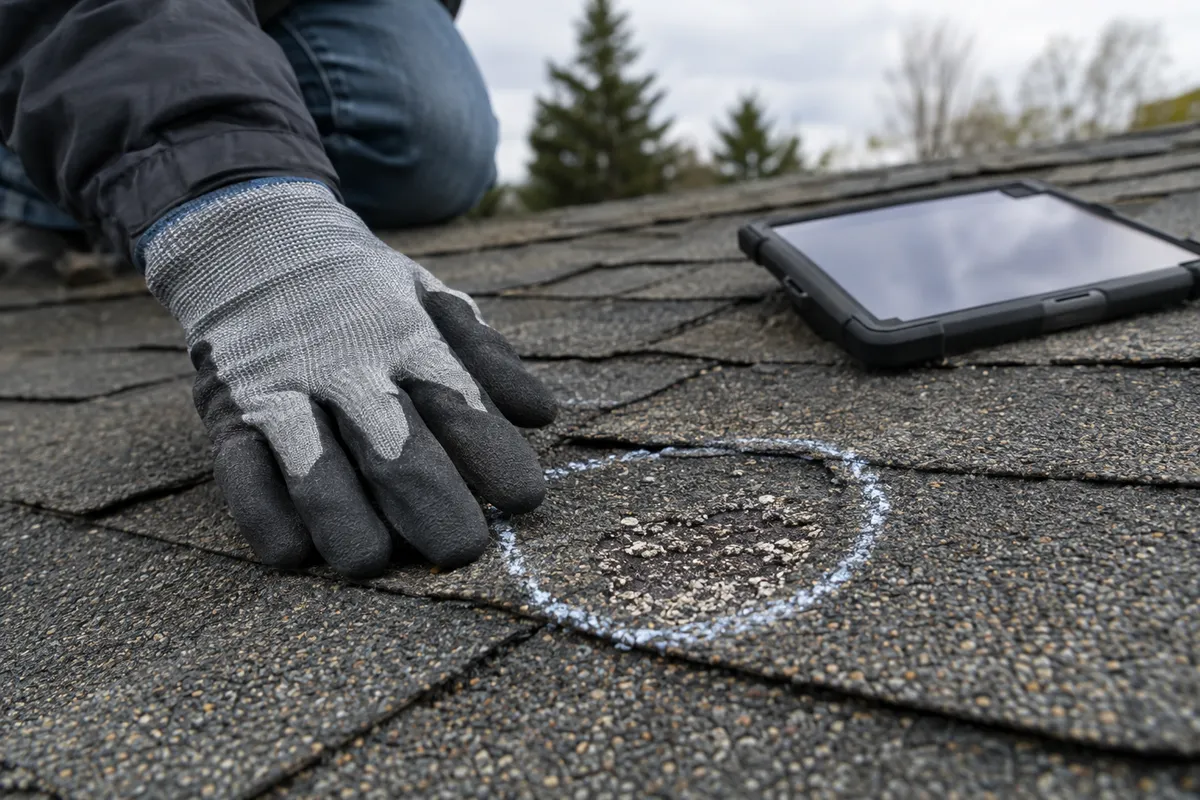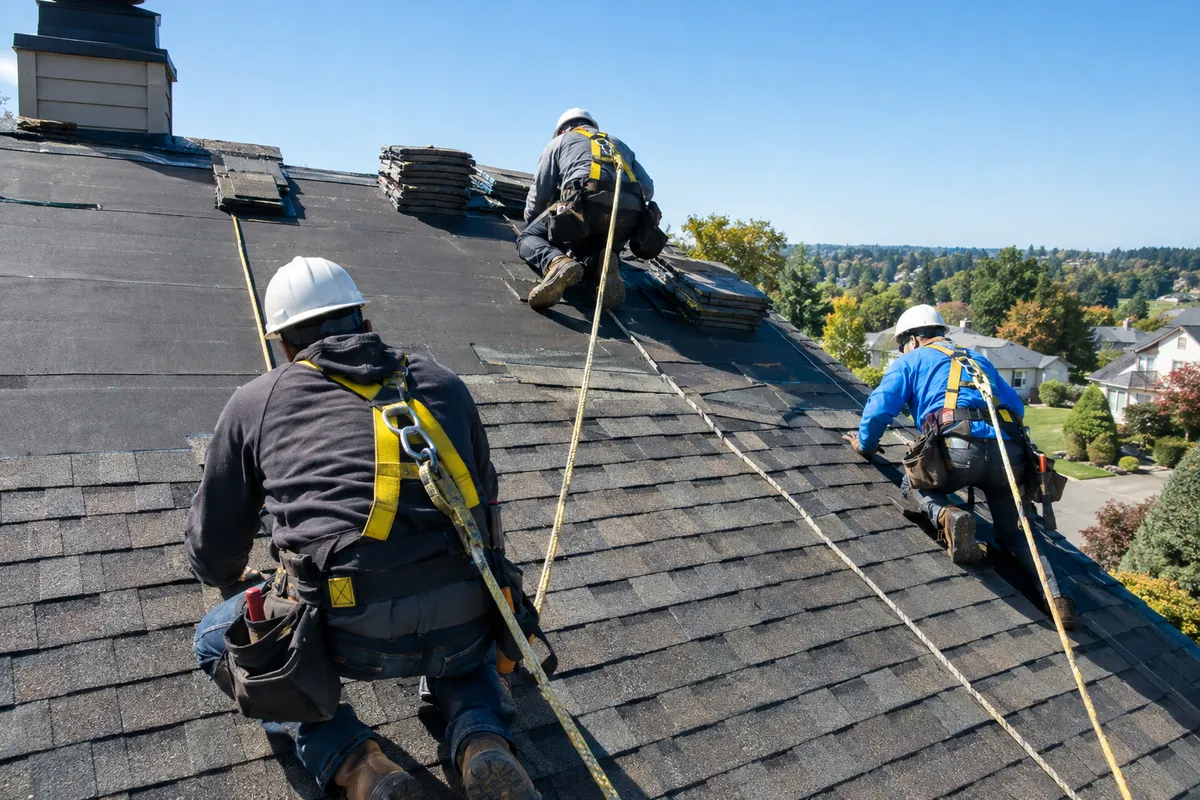
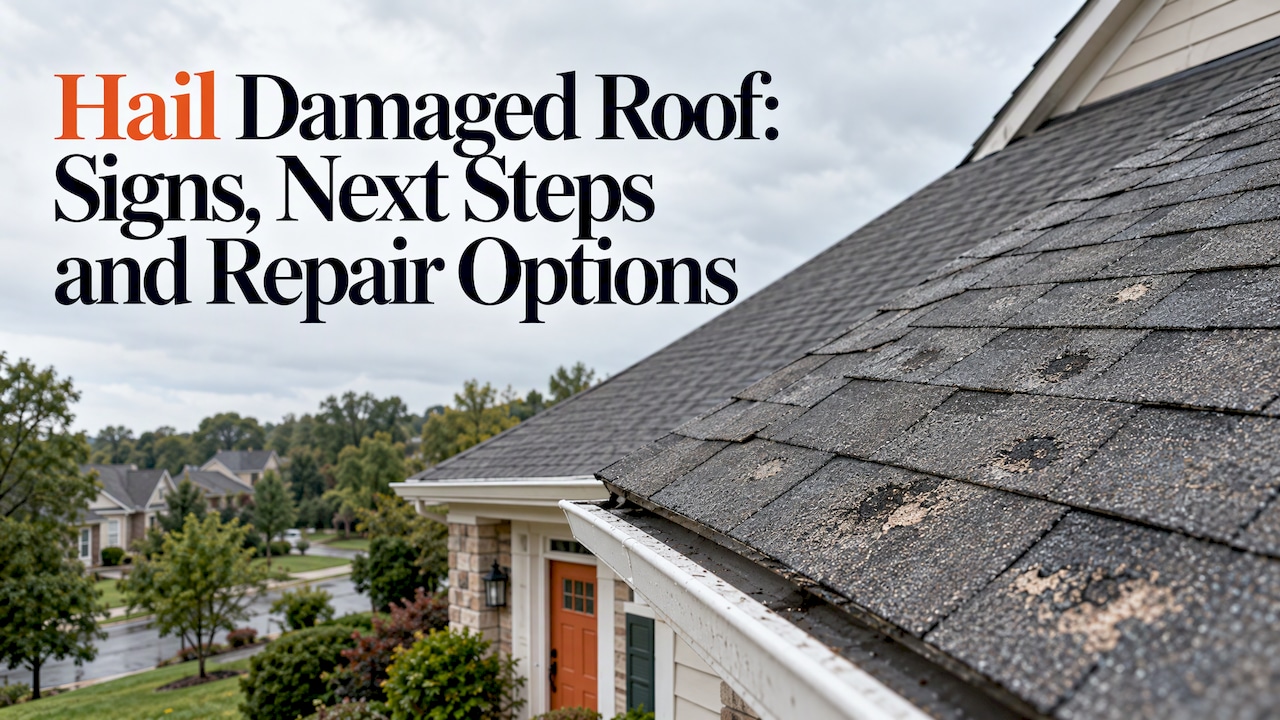
Hail can damage a roof without leaving a leak, a missing shingle or anything you can see from the yard. The reliable way to find out is to document what you can see from the ground, then get a photo-documented roof inspection before the damage turns into water inside the house. In Northern Virginia, we start every project with a free, photo-documented inspection and a written proposal, so you know what the storm did and what your options are before you commit to anything.
This guide covers what hail does to a roof, the signs to look for from the ground, what to do in the first days, how repair and replacement are decided, what it costs, and how insurance fits in.
TL;DR
- Hail damage is often small and scattered, and it may not leak for months. A roof that looks fine is not proof it came through unharmed.
- From the ground, look for dents on gutters, vents, window trim and AC units, plus granules in gutters and downspouts. Stay off the roof.
- Photograph everything, file a claim promptly if you see damage, and protect the house from further water.
- Many hail repairs are small shingle replacements. Severe cracking, fractures or heavy granule loss can call for a larger repair or a replacement.
- Our roof inspection is free, photo-documented and comes with a written proposal.
Table of Contents
- Why hail damage matters even when nothing leaks
- How big does hail have to be?
- Signs of a hail damaged roof you can check from the ground
- What to do in the first days after hail
- What a proper hail inspection involves
- Repair or replace a hail damaged roof?
- What hail roof repair costs
- Does homeowners insurance pay for hail damage?
- Our perspective
- Get your roof inspected in Northern Virginia
- FAQ
- Sources
Why hail damage matters even when nothing leaks
Asphalt shingles are a base of asphalt covered in mineral granules. Owens Corning’s February 2025 technical bulletin explains that a hail impact can break the bond between the asphalt and its granules. Once granules are loose or gone, the asphalt is exposed to UV radiation, which can speed up oxidation and age the shingle early. Severe impacts can crack a shingle and weaken its ability to shed water. The same bulletin notes that the effects may take several months to show.
That delay is the reason timing matters. The National Roof Certification and Inspection Association (NRCIA) says hail damage is often small and scattered and may not leak for months. Water follows the easiest path and finds the one weak spot a hailstone created. Photos taken soon after the storm are the clearest record you will have.
How big does hail have to be?
Not every hailstorm hurts a roof. The Nebraska Department of Insurance gives rough thresholds:
| Roof condition | Hail size that can cause damage |
|---|---|
| Heavy composite or wood shake shingles | About 1¼ inches (half-dollar) |
| Lightweight composite shingles | About 1 inch (quarter) |
| Deteriorated shingles | More than ¾ inch (dime) |
The same page points out that hail strong enough to hurt a roof usually dents nearby cars, wood fences, shutters and siding. If your neighbors’ cars or fences were marked, take your roof seriously. Older, worn shingles are damaged by smaller stones, which is one reason roof age matters in every hail claim.
Signs of a hail damaged roof you can check from the ground
You do not need to climb up. Walk the property in daylight and look at the metal and soft spots first, because they show hail strikes most clearly.
- Dented gutters, downspouts and vents. The NRCIA lists new dents in gutters, downspouts, vents, window trim and AC units as ground-level clues.
- Granules in gutters or at downspout ends. Granule loss alone does not prove hail damage, according to the Nebraska Department of Insurance, but it is worth recording along with the other signs.
- Cracked or missing shingles you can see from the yard or from an upstairs window.
- New ceiling or attic stains, even faint ones.
- Dents on siding, shutters, fences and cars, which show the stones were large enough to matter.
On the shingles themselves, hail damage typically shows as indentations, fractures or circular areas where granules are missing. Owens Corning’s hail guide adds that some damage, such as a shingle split by impact, can only be seen from the underside of the shingle. That is why a ground-level look is a first screen and not a verdict.
Hail strikes versus other causes
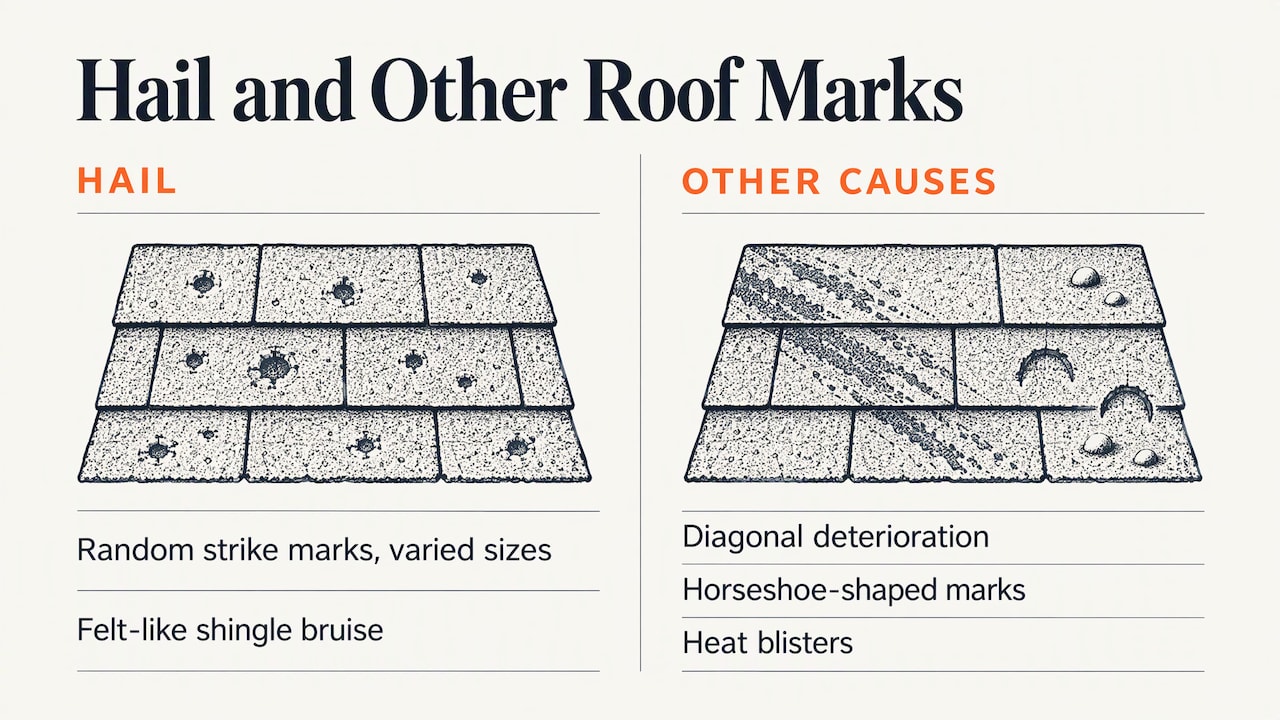
Not every mark is hail. The Nebraska Department of Insurance describes hail damage as a random pattern of strike marks in different sizes, with a felt-like bruise in the shingle mat. Patterns such as diagonal deterioration, horseshoe-shaped areas or blisters point to other causes, such as manufacturing defects, hammer damage or heat blisters. A trained inspector can tell the difference, and a clear written finding helps if you file a claim.
Other roof materials
Progressive’s list of hail signs by roof type covers dark spots, divots and granule loss on asphalt shingles. On metal roofs it lists dents, coating damage and seam damage. On tile and slate it lists cracked or broken pieces. If you have a metal roof, our guide to metal roof hail damage covers what to check.
What to do in the first days after hail
- Stay safe and stay off the roof. The NRCIA advises homeowners not to climb up to look. Wet shingles, loose granules and unseen damage make a fall a real risk.
- Document from the ground. Photograph all four sides of the house, each dent, the gutters and any granules. Take wide shots, medium shots and close-ups with a coin or tape measure for scale. Note the date and time of the storm and, if you can, the hail size.
- Check inside. Look at ceilings, attic insulation and the area around chimneys and vents for stains or damp.
- Limit further damage. The Texas Department of Insurance advises removing standing water and covering holes, and saving receipts because a policy may pay for temporary repairs. If there is an opening in the roof, see our guide to emergency roof tarping and our first 48 hours checklist.
- Call your insurance company if you see damage. The same Texas guidance says to file as soon as possible and to keep damaged items until the insurer says you can discard them. Check your own policy for its claim deadline and notice terms.
- Get a roof inspection. A written inspection report gives you something specific to show the insurer and to base a repair decision on.
Our step-by-step page on storm damage and your roof walks through the claim sequence in more detail.

What a proper hail inspection involves
The Roofing Contractors Association of Texas says homeowners can spot dents, granule loss and debris from the ground, but only a professional can safely assess the full extent. Contractors examine shingles for bruising and cracking, and lift shingles to check the underlayment, which a homeowner cannot see.
Our inspection follows that logic and is built around records:
- It is free and photo-documented, so every finding is tied to a picture.
- You get a written proposal with good, better and best options, so you can compare a targeted repair with a larger scope instead of getting one number.
- Work is documented before, during and after, so the record carries through to closeout.
If you are comparing contractors, our guide on how to hire a roofer in Virginia lists the license and contract checks to make.
Repair or replace a hail damaged roof?
The National Roofing Contractors Association (NRCA) says in its guidance on roof repair after a hailstorm that most hail-related damage is cosmetic and will not affect shingle life. It also says severe wood splitting, significant granule loss, shingle penetration or fracture may require shingle replacement, and that homeowners should not attempt roof-system repairs except in extreme situations.
In practice, the decision usually comes down to these points:
| Situation | Typical direction |
|---|---|
| A few cracked or bruised shingles in one area, roof otherwise sound | Targeted roof repair |
| Damage spread across several slopes, heavy granule loss or fractures | Larger repair or roof replacement |
| Roof already near the end of its life | Replacement is often the better use of money |
| Dented metal panels or damaged seams | Assessment by material, see metal roofing |
Our article on roof replacement versus repair goes through the trade-offs, and the shingle roof repair guide shows what can be fixed on asphalt shingles.
If hail also dented your gutters or siding, we handle gutter and siding repair too, so the exterior can be assessed in one visit.
What hail roof repair costs
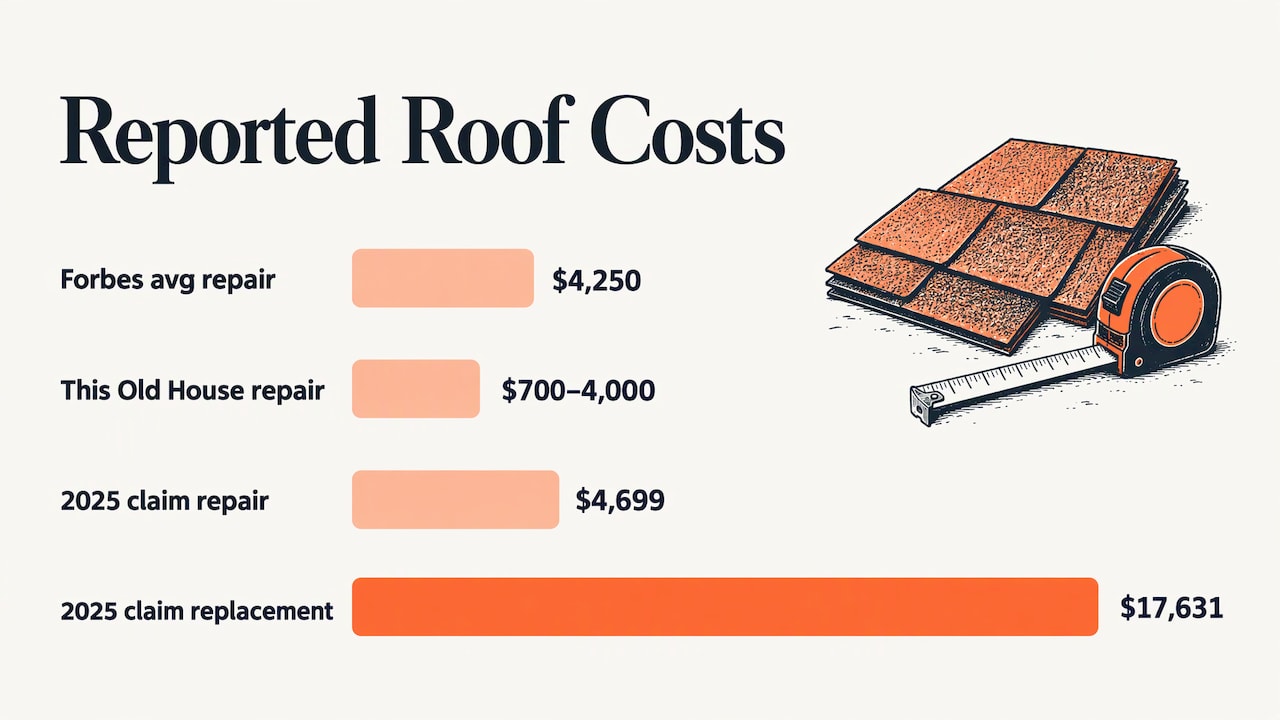
Cost depends on roof size, material and how much of the roof is affected. Forbes Home reports an average hail-damaged roof repair of about $4,250. It ranges from under $200 for minor fixes to over $32,500 for a full replacement, and the article quotes $6 to $12.50 per square foot. This Old House lists hail roof repair at $700 to $4,000, with surface damage costing less than structural damage.
For context on claims, Verisk’s U.S. Roof Report found that average roof replacement cost in claims reached $17,631 in 2025 and average repair cost reached $4,699. It also found that roofs in moderate-to-poor condition had 60% higher loss costs than roofs in good or excellent condition. A well-maintained roof is cheaper to put right, which is one reason we publish a roof maintenance checklist for Northern Virginia.
These are national figures from 2024 and 2025. We do not publish prices for our services, because the price follows the inspection: the written proposal gives you the figure for your roof.
Does homeowners insurance pay for hail damage?
Usually, yes, with conditions. Insurance.com explains that dwelling coverage (Coverage A) covers hail damage to the house. On a standard HO-3 policy, the first check is the depreciated value minus your deductible, and the recoverable depreciation is paid after repairs are complete. A separate wind or hail deductible may run 1% to 5% of the dwelling limit.
Three policy terms are worth reading before you file:
- Replacement cost versus actual cash value. The Texas Department of Insurance notes that some policies pay the full current cost to repair a roof, while others pay actual cash value, which can be less for older or worn roofs.
- Cosmetic damage exclusions. The Oklahoma Insurance Department says some policies exclude damage that affects only appearance and not function, and some carry higher hail-specific deductibles.
- Partial replacement. If hail damages only part of the home, the insurer may only have to replace that portion, which can leave mismatched shingles unless a matching clause applies.
Claim rules differ by state and by policy, so your own policy and the Virginia Bureau of Insurance are the final word on deadlines and your rights. An inspection report with dated photos gives you the evidence the claim needs. Our storm damage restoration work includes written change orders and a closeout with lien waivers and warranty delivery, so the paperwork matches what was done.
Our perspective
Most hail calls start the same way: the homeowner sees a few dents on the gutters and does not know whether the roof is affected. What helps most is not a sales pitch. It is a clear record.
That is why every project of ours begins with a free, photo-documented inspection and a written proposal with good, better and best options. You see what we found, you see the choices, and you decide at your own pace.
We document the work before, during and after. Changes are put in writing as change orders. At closeout you receive lien waivers and your warranty. A hail-damaged roof is a big decision, and we believe it should come with paper you can keep.
If hail has hit your roof, get it inspected soon after the storm. Early documentation protects your options, whether you end up with a small repair or a full replacement.
Esteam
Get your roof inspected in Northern Virginia
If you suspect hail damage in Fairfax, Arlington, McLean, Oakton, Springfield, Centreville or the surrounding area, start with our free roof inspection. You get photographs of what we find and a written proposal with good, better and best options.

If the roof turns out to need work, we handle roof repair, storm damage restoration and roof replacement ourselves. You can see finished jobs on our Northern Virginia project photos page.
FAQ
How long do I have to check my roof after hail?
Start right away. Hail damage can take months to show as leaks, and photos taken soon after the storm make the clearest record. Your policy sets its own claim deadline, so read it and report promptly if you see damage. Some states set minimum windows for roof claims, which is why your insurer or the Virginia Bureau of Insurance is the place to confirm your rights.
Can I inspect the roof myself?
You can safely check from the ground: gutters, downspouts, vents, AC units, siding and the granules around downspouts. Do not climb onto the roof, because the NRCIA advises against it. Some damage is only visible from the underside of the shingle, so a professional inspection gives the full picture.
Will hail damage always mean a new roof?
No. The NRCA says most hail-related damage is cosmetic, while severe fractures, penetration or heavy granule loss can require shingle replacement. The extent of damage, the roof’s age and its material decide whether a repair or a replacement fits.
Does insurance cover hail damage to a metal roof?
Often it does, but some policies exclude cosmetic damage, such as dents that do not affect how the roof works. Check your policy wording for a cosmetic damage exclusion and for the hail deductible. Our guide on metal roof hail damage explains what to check.
Sources
- Owens Corning hail damage technical bulletin (February 2025)
- NRCIA: Hail hit your roof. Here is what to do next.
- Nebraska Department of Insurance: Hail Damage, Does My Roof Need Repair?
- Owens Corning: Roof Hail Damage
- Progressive: Signs of Hail Damage To Your Roof
- Texas Department of Insurance: Hail damage to your home or car?
- Roofing Contractors Association of Texas: hail damage assessment
- NRCA: Roof Repair After a Hailstorm
- Forbes Home: How Much Does Roof Hail Damage Repair Cost?
- This Old House: What Is the Cost of Roof Repair?
- Verisk: U.S. Roof Report
- Insurance.com: Hail damage insurance claim guide
- Texas Department of Insurance: Insurance and your roof
- Oklahoma Insurance Department: Wind and Hail