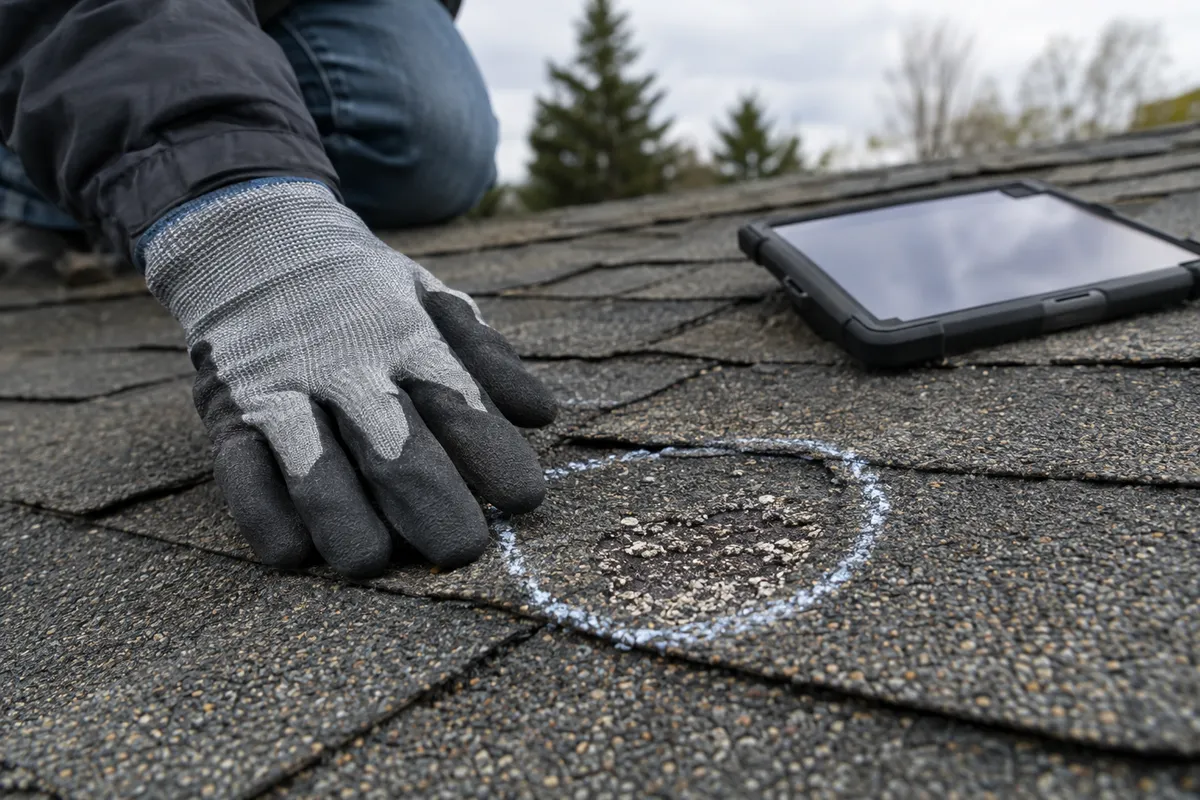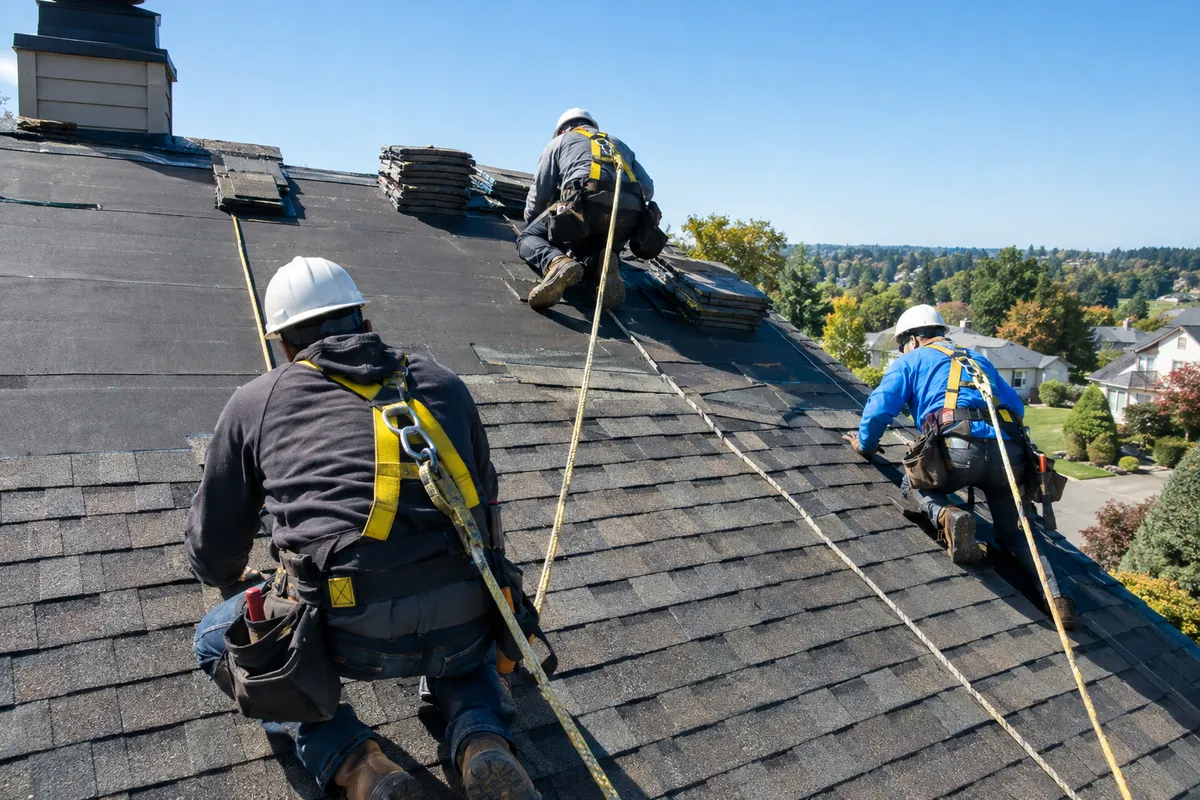

Metal roofs handle hail better than most roofing, and the usual result of a bad storm is dents, not holes. The real question after hail is whether those dents are only cosmetic or whether they have affected the seams, laps, fasteners or trim that keep water out. A written, photo-documented inspection answers that question. It also gives you the evidence your insurer will ask for. At Esteam Roofer, every project starts with a free, photo-documented inspection and a written proposal, which is the record you want in hand before you talk to your insurance company.
TL;DR
- Hail rarely punctures or splits a metal roof. A 2014 study of hail on metal roofing found fewer than ten punctured or split roofs, and minor dents did not affect long-term performance.
- Dents at seams, laps and clip junctions matter more than dents in the middle of a flat panel, because that is where the roof sheds water.
- Check from the ground first. Look at gutters, vents, trim and the paint. Do not walk on a roof that may be damaged.
- Many policies treat dents differently. Read your declarations page for a cosmetic damage exclusion before you file.
- Document the storm date, photograph everything, and get a written inspection before any permanent repair.
Table of Contents
- Can hail damage a metal roof?
- What hail damage to a metal roof looks like
- Where dents matter and where they do not
- How to check your roof safely after a storm
- When dents need repair and when panels need replacing
- Does homeowners insurance cover hail damage on a metal roof?
- Why a documented inspection comes first
- Our perspective
- Get the roof looked at
- FAQ
- Sources
Can hail damage a metal roof?
Yes, but the damage is usually dents. Metal panels are tough, and most hailstorms produce stones too small to break through them. A hailstone has to be large and fast to dent steel at all, and larger still to crack a seam or tear a panel.
One way the industry measures this is UL 2218 impact testing. Its Class 4 rating, the highest, drops a 2-inch steel ball from 20 feet, which is comparable to a 2-inch hailstone at terminal velocity. The same IIBEC-published paper notes that the Texas Department of Insurance listed 28 manufacturers whose metal products passed Class 4. Ask for the rating of the panels on your roof, or on the roof you are considering.
A rating describes a lab test. Your roof has real seams, clips, fasteners and trim, and those are what you inspect after a storm.
What hail damage to a metal roof looks like
Start with the obvious and move to the subtle. After a storm, these are the signs to look for:
- Round or oval dents in the flat areas of panels. Hail dents tend to be rounded and scattered, not in a single line.
- Chipped or scuffed paint where bare metal shows. The coating protects the panel, so any exposed metal is worth documenting.
- Bent or dented trim, such as ridge caps, drip edges and gutters.
- Damaged penetrations: vents, pipe boots, chimney flashing and skylights.
- Distorted seams or laps, where panels overlap or lock together.
- Loose or crushed fasteners on through-fastened panels, which rely on exposed screws with washers.
- Interior signs: new water stains on ceilings or in the attic after a rain that followed the storm.
The type of roof changes what to look for. Standing-seam roofs shed water at raised seams held by concealed clips. Through-fastened panels, often called R-panel, rely on screws and washers. A light dent on a standing-seam flat may be only a mark. The same hail on a through-fastened roof can crush a washer, and that opens a path for water. Most residential metal roofs in Northern Virginia are standing seam or a metal shingle or tile profile, so a report should name the system and judge the damage against how that system sheds water.

Where dents matter and where they do not
The research points to one distinction: dents in the open field of a panel versus dents at the connections.
The IIBEC-published Koontz and White study found that substantial indentations at side laps, end laps or where a panel meets a concealed clip can affect the roof’s ability to shed water. It also found that minor indentations may have little to no effect for an extended period. The RCI version of the study adds that long-term corrosion at hail impact points had not occurred, and that dents must be of significant size to distort a lap enough to leak in wind-driven rain.
That gives you a practical way to read an inspection:
| Where the damage is | What it usually means | What to ask for |
|---|---|---|
| Scattered dents in flat panel areas | Appearance change, often no effect on water-shedding | Photos with a scale reference, count per area |
| Dents at laps, seams or clip junctions | May affect how water sheds | Close-up photos and a written finding on the seam |
| Chipped coating, bare metal | Surface protection compromised at that spot | Location and size noted in the report |
| Crushed washers or loose screws | Possible leak path on through-fastened roofs | Repair of each affected fastener |
| Bent trim, vents, boots, gutters | Often the first visible proof of hail | Replacement or repair line items |
A good report states what the hail did and did not do. Haag Engineering advises inspectors to describe the physical effects instead of just labeling damage “cosmetic” or “functional,” and defines functional damage as a reduction in water-shedding capability or expected service life.
How to check your roof safely after a storm
You do not need to climb up to start the process. The NRCA, the national roofing trade association, advises homeowners not to inspect alone on a storm-damaged structure that may not be sound. A metal roof can also be slick, especially when wet, so this is one inspection to do from the ground.
- Wait for the storm to pass and for surfaces to dry.
- Write down the date and time of the storm. Your insurer will match your claim against weather records.
- Walk the property. Look for dented gutters and downspouts, dented AC condenser fins, window screens, and dents on mailboxes, grills or vehicles.
- Look up at the roof with binoculars or your phone’s zoom. Check ridge caps, drip edges, vents and the paint finish.
- Photograph any hailstones next to a coin or ruler for scale if they are still on the ground.
- Check the ceiling and attic for new stains after the next rain. Photograph any water, and contain it without making permanent repairs.
- Request an inspection before you commit to any repair.
Thin aluminum items are useful evidence. The NRCA notes that inspecting thin aluminum fixtures helps verify hail impact, and the same guidance says that whether hail fell at a site can be verified through statements and weather reports. The NRCA adds that assessment commonly happens several days to several months after the event, so there is time to do this properly.
If the storm left active leaks or damaged panels, our guide on what to do in the first 48 hours after roof storm damage walks through temporary protection and documentation. Keep receipts for tarping: the NRCA says the insurer is likely to reimburse them.
When dents need repair and when panels need replacing
Most hail damage on metal falls into three outcomes.

Monitor and document. Shallow dents in open panel areas, with no coating damage and no distortion at seams, often have no effect on performance. Photograph them with a date so you have a record if a later claim or sale comes up.
Repair. Bent trim, damaged flashing, loose or crushed fasteners, failed sealant and damaged vent boots are all repairable without touching the field panels. Chipped coating can be addressed at the affected spot. Our roof repair service covers this kind of targeted work.
Replace panels or the roof. When seams or laps are distorted, when panels are punctured, or when dents are widespread enough that the roof can no longer be made watertight or uniform, panel replacement is the answer. If the whole roof is affected, the question becomes repair versus replacement. Our comparison of roof replacement versus roof repair lays out how to decide.
One caution applies to every case. Do not let a one-size answer replace a close look. Some dents on a standing-seam roof can also be pre-existing waviness in the metal, often called oil-canning, which is not hail. A careful inspector separates the two in the report.
Does homeowners insurance cover hail damage on a metal roof?
It depends on your policy wording, and this is where metal roofs differ most from shingles. Coverage rules and available endorsements vary by state and insurer, so treat the examples below as illustrations of how the wording works, not as a promise about your policy.
Standard policy. The Insurance Institute for Property Loss Reduction’s affiliate, the IIAT, states in its roof claims guidance that dents in a metal roof are physical damage that triggers coverage under a standard unendorsed policy. It adds that insurers use an endorsement such as HO-145 to exclude cosmetic damage, typically with a premium discount.
Cosmetic damage exclusions. Many insurers now attach this endorsement to metal roofs. One example is an Allstate form, AVP313, which excludes dents, distortions, scratches and marks that change a metal roof’s appearance, as quoted in a 2025 industry news report. With an exclusion like that, the question is whether the hail caused functional damage, such as a compromised seam, a puncture or a leak.
Court outcomes differ with the wording. In Riley v. Safeco in Texas, an engineer found no cracks, chips, punctures or penetrations and no attic water stains, concluded the dents were cosmetic, and the insurer denied the claim under a cosmetic exclusion, according to the court’s opinion. In a Wisconsin case without such an exclusion, a court found on summary judgment that dents up to one inch were direct physical loss, even though an inspector said they would not affect performance or roof life. Same kind of dent, different policy language, opposite result.

That is why policy wording matters more than the dent itself. For a plain-language look at how dent coverage and cosmetic endorsements play out on another hail-exposed part of the house, see this piece on dent repair versus panel replacement.
What to check in your own policy
- Find your declarations page and look for endorsements by form number. Words like “cosmetic damage exclusion” or “metal roof surfaces” are the ones to find.
- Check whether your roof is paid at replacement cost or actual cash value. A roof-surfacing endorsement can shift an older roof to actual cash value, which pays less after depreciation.
- Check your hail or wind deductible. Some policies set it as a percentage of the home’s insured value instead of a flat amount.
- Note the deadline to report a claim. Late notice is a common reason claims are denied.
For questions about what your policy covers, call your insurance company or agent. The insurer decides coverage, not the roofer. The NRCIA, a roof-inspection association, notes that an independent inspector documents roof condition and, when assigned, the cause, while the insurance company makes the coverage decision. An inspector should not promise payment or negotiate your claim unless properly licensed, and licensing rules vary by state.
Why a documented inspection comes first
Whichever way your policy reads, the same evidence helps: dated photos, the storm date, close-ups of seams and trim, and a written description of what the hail did to the roof. Without it, a claim becomes a disagreement over opinions.
Our free inspection is photo-documented, and it ends with a written proposal. For a hail-damaged metal roof, that means you get a record of the roof’s condition, organized so you can share it with your insurer, and a clear scope of any work. You decide what to do with it, and you decide before any work starts.
Our perspective
We start from the roof, not the claim. Hail is a weather event, and what matters afterward is what it did to your particular roof: the seams, the laps, the fasteners, the trim and the coating.
That is why every project we take on begins with a free, photo-documented inspection and a written proposal with good, better and best options. You see what we found, in pictures, before anyone talks about cost.
We document the work before, during and after. If the scope changes, it changes in writing through a change order. When the job ends, we close it out with lien waivers and warranty delivery, so you have the paperwork in hand.
A metal roof is a strong choice for Northern Virginia homes, and a good installation is built to hold up to storms. If hail has touched yours, the right next step is a clear, documented look, then a plan that fits what you found.
Esteam
Get the roof looked at
If a storm has passed through Fairfax, Arlington, McLean, Oakton, Springfield, Centreville or nearby, our roof inspection is the place to start. We photograph the roof, gutters and exterior, and give you a written proposal. If repairs are needed, our storm damage restoration team handles the work, and our metal roofing page covers panel repair and replacement.

For gutters and siding hit by the same storm, see our exterior services. To see what finished jobs look like, browse our project photos. For the claim sequence in more detail, read storm damage and your roof: what to do first.
FAQ
Will hail puncture a metal roof?
It is uncommon. The 2014 Koontz and White study found fewer than ten metal roofs punctured or split by hail. Denting is far more likely than puncturing, and most storms produce stones too small to do either.
Are dents on a metal roof a problem if it does not leak?
Often they are not a performance problem. Minor dents may have little to no effect on a roof for an extended period, according to the IIBEC-published study. Dents at laps, seams or clip junctions deserve a closer look, because that is where water-shedding can be affected.
Does homeowners insurance cover hail dents on a metal roof?
That depends on your policy. A standard unendorsed policy treats dents as physical damage, while a cosmetic damage exclusion removes coverage for dents that do not affect function. Check your declarations page for the endorsement, and ask your insurer how your policy treats metal roofs.
How soon should I get my roof inspected after hail?
Do it soon enough to meet your policy’s reporting deadline, and do not wait for a leak. The NRCA notes that damage assessment commonly happens several days to several months after a storm. A prompt inspection gives you dated photos while the storm is still easy to connect to the damage.
Can I check a metal roof for hail damage myself?
You can check from the ground. Look at gutters, vents, trim, AC fins and the roof’s finish with binoculars, and photograph what you see. Stay off the roof itself, since a damaged or wet metal surface is a fall risk.
Sources
- The Effects of Hail on Metal Roofing Systems (RCI, 2014)
- The Effects of Hail on Metal Roofing Systems (IIBEC)
- Assessing Hail Damage: Functional vs. Cosmetic (Haag)
- Roof Repair After a Hailstorm (NRCA)
- Roof Claims Issues (IIAT)
- Allstate rejects $332k appraisal award (Insurance Business)
- Riley v. Safeco, U.S. District Court, W.D. Texas
- Cosmetic Damage Caused by Hail is a Direct Physical Loss (Property Insurance Coverage Law Blog)
- Hail hit your roof. Here is what to do next (NRCIA)