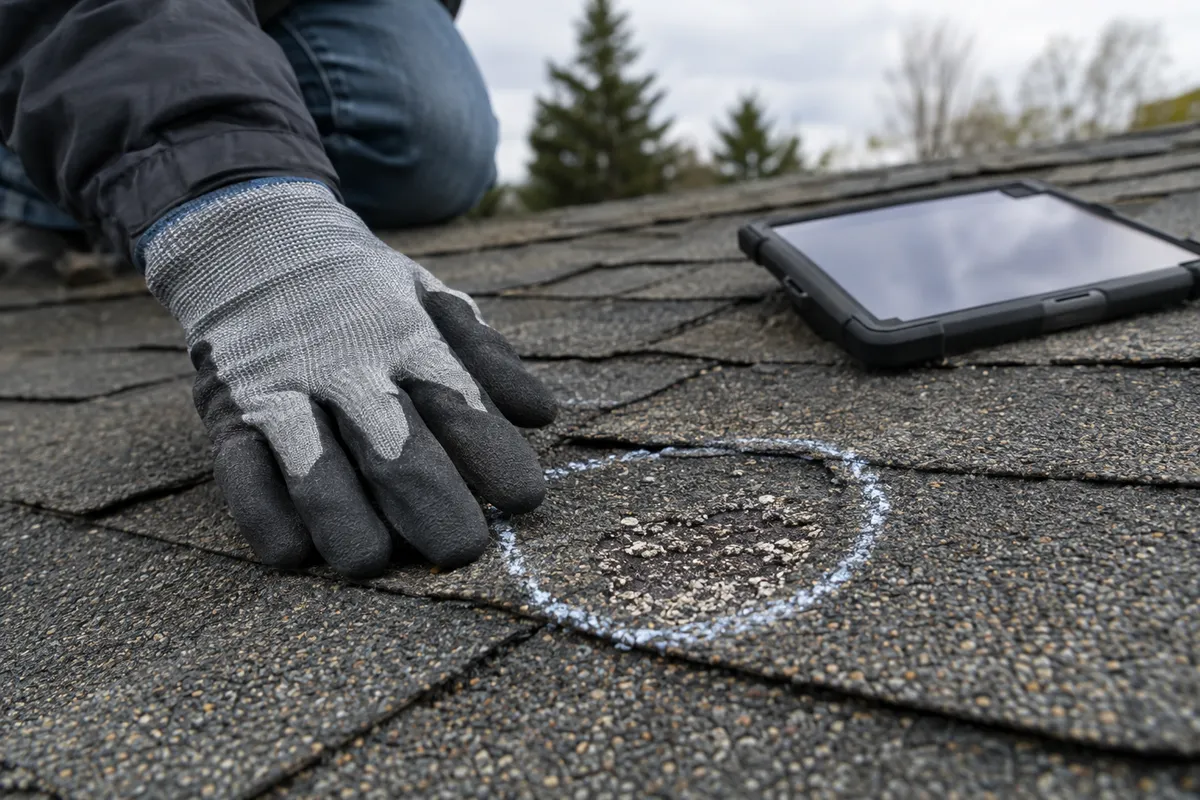

Most metal roof leaks come from a small number of places: fasteners that have backed out, seams that have lost their sealant, flashing around penetrations, and rust that has started in a scratch or cut edge. All of these are fixable, and the fix is rarely a tube of caulk. Manufacturers say surface-applied sealant is the wrong repair, because it fails and traps water. A lasting repair means opening the joint or replacing the fastener or panel. That is work done on a slippery, sloped surface, and it affects your warranty. For homeowners in Northern Virginia, we start with a free, photo-documented inspection and a written proposal, so you know what is wrong before anything is repaired.
TL;DR
- Find the source first: check the attic on a sunny day for daylight and stains, then look at fasteners, seams, flashing and penetrations.
- Do not coat a leak with roof cement or caulk. Manufacturers say it weathers, loses adhesion and traps water against the metal.
- White rust and light surface red rust can be cleaned and primed. Widespread red rust or a corroded panel needs a professional.
- Metal is slippery when wet, and a one-story eave is close to the 6-foot fall-protection height. Leaks at standing seams, multiple leak points or hard-to-reach areas are roofer jobs.
- Check your warranty before any repair. Manufacturers ask to be consulted first.
Table of Contents
- Where metal roofs actually leak
- How to find the source of a leak
- Why caulk and roof cement are the wrong fix
- Repairs by problem
- Rust on a metal roof
- What you can safely do yourself, and what to leave
- Check your warranty before any repair
- What affects the cost of a repair
- Prevent the next leak
- Repair or replace?
- Metal roof repair from Esteam Roofer
- Our perspective
- FAQ
- Sources
Where metal roofs actually leak
A metal roof sheds water well because the panels are large and the joints are few. That also means each joint matters. When a metal roof leaks, the cause is almost always one of these:
- Fasteners. Exposed-fastener panels (the kind with visible screws) are held down by screws with rubber washers. Over years of heating, cooling and wind, washers crack and screws back out or strip their holes.
- Seams and laps. The Roof Coatings Manufacturers Association (RCMA) explains in its August 2025 metal roofing guide that the primary seal on a metal roof is the seam tape or caulk inside the panel joints. When that seal fails, water gets in.
- Flashing and penetrations. Chimneys, vents, skylights, plumbing stacks and changes in slope are the usual trouble spots. A Florida state guide to metal roofs names the same places when it tells owners where to look for leaks.
- Corrosion. Rust starts at scratches, cut edges, fastener holes and places where water sits.
- Impact damage. Hail, fallen limbs and foot traffic can dent, puncture or crack coatings. If a storm is the cause, our guide to metal roof hail damage shows what to check, and our storm damage steps cover what to do first.
Water also travels. A drip on your ceiling can be several feet from the real opening, because it runs along the underside of the panel or the decking before it drops.
How to find the source of a leak
Start from inside, on a dry day, and keep your feet off the roof.
- Go to the attic on a sunny day. The Florida guide advises using a flashlight to look for leak stains and for cracks or holes where daylight shows through. Pay most attention around chimneys, vents, skylights, plumbing stacks and changes in roof shape or slope.
- Look at the nails and the wood. The same guide notes that rusting nails coming through the sheathing can point to a leak around a vent. Dark staining on the underside of the decking marks a path water has followed.
- Trace uphill. Find the highest stained spot on a rafter or the decking. The opening is usually above it, not directly over the ceiling stain.
- Look at the roof from the ground. Binoculars work well. Look for missing or crooked flashing, lifted trim, screws standing proud of the panel, dents, and discolored or streaked areas that suggest rust or ponding water.
- Photograph everything. Date-stamped pictures of the stains and the roof help with warranty and insurance conversations.
If the stain appears only during wind-driven rain, think flashing and trim. If it appears in any heavy rain, think fasteners and seams. If you cannot trace it, that is a reason to bring in an inspector, not to start sealing guesses.
Why caulk and roof cement are the wrong fix
It is tempting to smear sealant over the wet spot. Two metal roofing manufacturers advise against it for the same reason.
Berridge’s maintenance and repair guidance says leaks should not be repaired by applying roof cement, caulk or other materials to the roof surface. These materials weather and lose adhesion, which traps water and causes rust. The proper method is to remove the panels around the leak and reinstall them with sealant in the joints. McElroy Metal’s owner’s manual says the same about surface-applied caulks and compounds, and says joint leaks should be fixed by disassembling the joint and placing sealant between the metal layers.
A surface patch can stop a drip for a season while water keeps moving under it. That hidden moisture is how a small leak becomes rotted decking and a panel that is corroded from behind.
Repairs by problem
Loose or stripped fasteners
On exposed-fastener roofs, this is the most common repair. The Union Corrugating building maintenance manual (March 2024) describes the method for a stripped-out fastener: remove the existing fastener, apply urethane sealant into the hole, and install an oversize long-life fastener.

RCMA’s guide adds that missing screws should be replaced with larger screws fitted with rubber washers and a small amount of caulk on the heads. Before any resealing, check the seams, tighten loose screws and replace worn washers.
The common mistake is to drive the same screw back into the same worn hole, or to overtighten so the washer is crushed. Both bring the leak back.
Failed seams and laps
When the seam seal has failed, RCMA says to inspect and tighten before resealing. For a true joint leak, the manufacturer guidance above calls for opening the joint and resealing between the metal layers. That is why seam work is rarely a quick caulk job. Standing-seam roofs, where the panels interlock with raised seams and have no exposed fasteners, are the hardest to repair because the joint itself has to be accessed and the panels have to be handled correctly.
Flashing and penetrations
Flashing is the formed metal that seals the roof around chimneys, vents, skylights and walls. Look for lifted edges, gaps, separated seams and fasteners that no longer hold. The building science resource from PNNL’s Building America Solution Center, authored with FEMA, says a professional contractor should install and inspect metal roofs for proper flashing, and that the contractor must not mix different metals on the roof, which can cause galvanic corrosion. Galvanic corrosion is the accelerated rusting that happens when two unlike metals touch in the presence of water.

Punctures and dented panels
A small dent that has not broken the coating is cosmetic. A puncture or a crack is different. Berridge notes that the entire panel may need replacement for puncture damage, and recommends consulting the panel manufacturer first. Panel replacement also needs matching profile, gauge and finish, which is one more reason to start from the original specifications.
Rust on a metal roof
Not all rust means the same thing. RCMA’s guide separates the stages:
| What you see | What it means | What the guide says to do |
|---|---|---|
| White powdery film on galvanized metal | First-stage corrosion | Seal with a rust-preventive primer |
| Small patches of surface red rust | Early rust | Remove with power washing, sand blasting or wire brushing, then seal with primer |
| Widespread red rust, or rust eating through a panel | Corrosion beyond a surface fix | Inspect panels to decide on replacement; repair is beyond a basic maintenance procedure |
RCMA also notes that structural metal roofs with red rust may be unsound and should not be walked on. If you see red rust that is spreading, flaking or leaving holes, treat the roof as something to be inspected from the ground and by a professional.
Find out why the rust started. Common causes are scratched coatings, water ponding in low spots, clogged gutters, fastener holes, and masonry or chemical spills. Union Corrugating’s manual says mortar and concrete can etch the paint or Galvalume coating and should be rinsed off promptly. If the cause is not fixed, the rust returns.
What you can safely do yourself, and what to leave
Some work is reasonable for a careful homeowner: attic inspection, ground-level checks with binoculars, clearing gutters from a ladder at the eave, and photographing what you see. Getting onto the roof is a different matter.
- Wet metal is slippery. The Florida guide warns that metal roofs are slippery when wet and can be dented or scratched by the wrong footwear. Union Corrugating’s manual says not to walk on wet panels, flashings, skylights, ridge caps or gutters, and to step only in the flat of the panel near supporting structure.
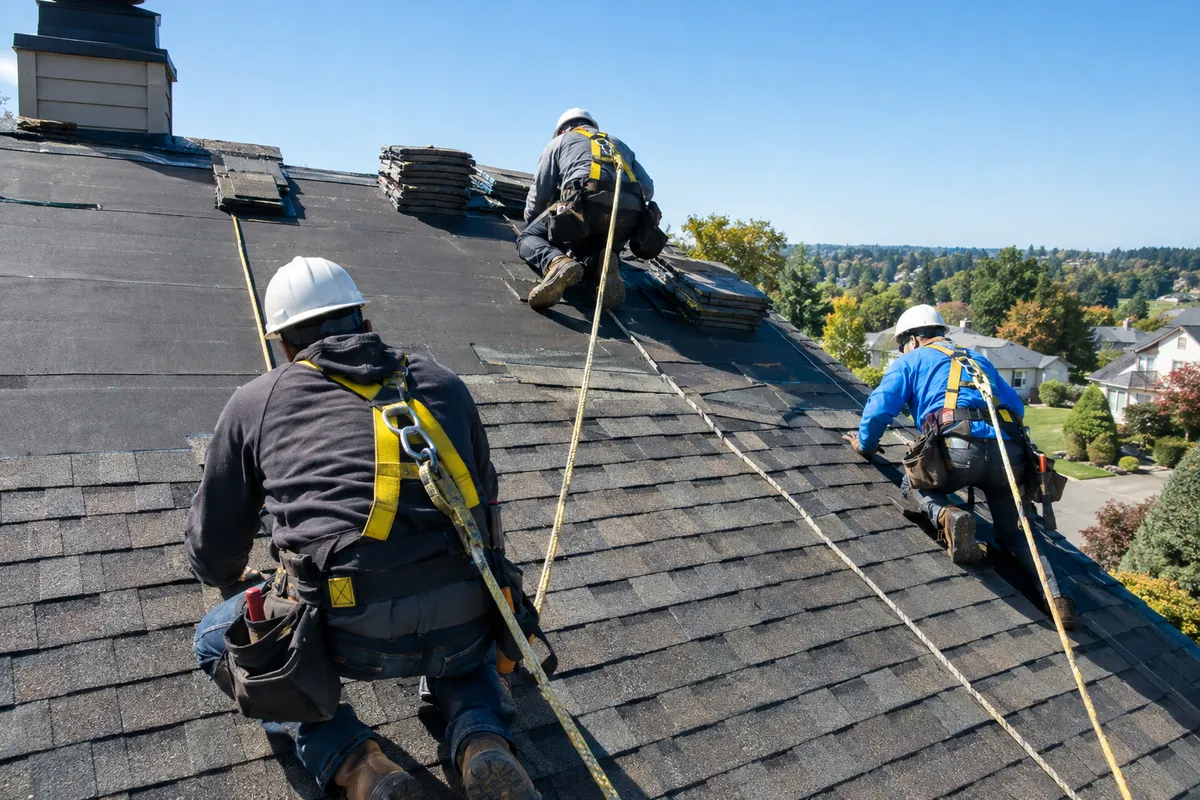
- Heights matter. The Roofing Brief notes that OSHA’s fall protection rule sets a 6-foot trigger for employers doing roofing and residential construction work, and that a one-story eave is near that height. Roofers use harnesses and anchors for this reason.
- Know the limits. The same source suggests calling a professional for standing-seam leaks, widespread rust, multiple leak sources, or roofs that cannot be reached safely.
If the roof is steep, wet, icy, or you are not comfortable on a ladder, stay on the ground. The leak will wait for a dry-day inspection. In the meantime, place a bucket, move belongings, and take photos.

Check your warranty before any repair
Metal roofing often carries a manufacturer warranty on the panels and the finish. Both Berridge and McElroy say to consult the manufacturer before repairs to protect that coverage, and RCMA directs homeowners with warranties to contact the roofing manufacturer. Find your warranty paperwork, the panel brand and the installation date before work starts. If a contractor installed the roof, ask them for the documents. A repair that does not follow the manufacturer’s method can cause an argument about coverage later.
What affects the cost of a repair
There is no single price for metal roof repair, because the range runs from a handful of fasteners to replacing panels. These are the factors that move the number:
- Type of problem. Replacing fasteners and resealing a seam are smaller jobs than replacing panels or treating a corroded section.
- Panel system. Standing-seam repairs and specialty profiles take more time and need matching materials.
- Access and pitch. Steep or tall roofs need more safety equipment and labor.
- Hidden damage. Wet decking or insulation under a long-running leak adds scope.
- Finish and matching. Replacement panels have to match gauge, profile and color.
Because scope changes with what is found, a repair estimate should be written, itemized and based on photos of the actual damage, not a phone guess. If a bid is a single line with no description of the fix, ask what it includes.
Prevent the next leak
Most metal roof problems are cheaper to prevent than repair. Berridge advises regular inspections and checks after severe weather:
- After high winds, look for loose or missing flashing and trim.
- After hail, look for coating damage, damaged trim and loose fasteners.
- After heavy rain, look for ponding water.
- After snow or ice, look at gutters, trim and flashing for damage.
McElroy’s manual calls for an inspection at least once a year and after fire, vandalism or known damage. Keep the roof and gutters free of debris so water drains quickly, avoid putting anything on the roof that causes ponding, minimize foot traffic, and clean panels with mild detergent, as Union Corrugating advises. In Northern Virginia, where we get summer thunderstorms, fall leaf load and winter freeze-thaw cycles, our roof maintenance checklist for Northern Virginia lays out what to check each season. For wider habits, see how to extend the lifespan of your roof.
Repair or replace?
Repair makes sense when the damage is local: a flashing, a run of fasteners, a seam, a single panel. Replacement is worth discussing when rust is widespread, many panels are failing, the decking is wet in several areas, or the leaks keep moving from one spot to another. A written proposal that lays out the options side by side lets you compare cost and expected life before deciding. If you are weighing materials too, our guide to asphalt shingles vs. metal roofing for NoVA homes covers the Northern Virginia picture.
Metal roof repair from Esteam Roofer
If you have a leaking metal roof in Fairfax, Arlington, McLean, Oakton, Springfield, Centreville or elsewhere in Fairfax County, we start with a free inspection that is documented with photos, then give you a written proposal with good, better and best options. We handle roof repair, metal roofing and storm damage restoration, and you can book a roof inspection first if you only want to know what is going on up there.
Work is documented before, during and after. Any change in scope goes into a written change order, and closeout includes lien waivers and warranty delivery.

See our roofing project photos to see what finished work looks like, or learn what a free roof inspection includes.
Our perspective
A leaking metal roof looks like a sealant problem from the ground. It is usually a diagnosis problem. The drip in the ceiling is the end of a path, and a repair that does not find the start of the path only moves the leak.
That is why our process begins with documentation. We photograph the roof, the fasteners, the seams and the flashing, so the proposal describes what is actually wrong and shows you. You get good, better and best options in writing, so you can choose the scope that fits the house and the budget.
We also think the paperwork after the repair matters as much as the repair. Written change orders keep the price from drifting, and closeout with lien waivers and warranty delivery means you have what you need in your files. Our approach is to document the work before, during and after so you are never guessing about what was done to your roof.
If your metal roof is leaking, rusting or has taken storm damage, a free inspection is the place to start.
Esteam
FAQ
Can I fix a leaking metal roof with roof cement or caulk?
Manufacturers advise against it. Berridge and McElroy both say surface-applied cement, caulk and compounds weather, lose bond and trap water, which leads to rust. The lasting repair is to replace the fastener or reseal the joint properly, and to consult the panel manufacturer first.
How do I know if the rust on my metal roof is serious?
White powder on galvanized metal and small areas of surface red rust are early stages that can be cleaned and primed, according to RCMA. Widespread red rust, flaking, or rust that has corroded through a panel calls for a professional inspection. A rusted roof may also be unsound to walk on.
Why does my metal roof leak around the screws?
On exposed-fastener roofs, the rubber washers wear out and screws back out or strip their holes as the metal expands and contracts. The manufacturer method is to remove the fastener, fill the hole with urethane sealant, and install an oversize long-life fastener.
Is it safe to climb on a metal roof to look for the leak?
Often it is better not to. Metal is slippery when wet, and walking in the wrong place can dent panels. Start in the attic and use binoculars from the ground, and call a roofer for steep, wet or hard-to-reach roofs.
Will repairing my metal roof affect the warranty?
It can. Manufacturers ask to be consulted before repairs so the work follows their method. Gather your warranty documents and panel details before any work begins.
Sources
- Metal Roofs, Florida state hurricane guide
- Building Maintenance Manual, Union Corrugating (March 2024)
- Maintenance of Metal Roofing, Berridge
- Metal Roofing, Roof Coatings Manufacturers Association (August 2025)
- Roof Owner’s Operation and Maintenance Manual, McElroy Metal
- Metal Roofs, Building America Solution Center (PNNL)
- Metal Roof Leak Repair: Fix by Source (2026), The Roofing Brief