The ridge is the horizontal line where two roof slopes meet at the peak, and the ridge cap is the row of shingles, tiles or metal that seals it. Roof ridge repair means replacing cracked, lifted or missing ridge caps, resealing fasteners and fixing the ridge vent or flashing beneath them, before water reaches the attic. It is work at the highest, most exposed point of the house, so the safest route is a written inspection first and a repair scoped to what that inspection finds. At Esteam Roofer, every project starts with a free, photo-documented inspection and a written proposal, so you see the damage before you decide anything.
TL;DR
- Ridge caps take the most wind, sun and hail of any part of the roof, so they often fail first. Look for missing, cracked or curled caps, exposed nails and stains in the attic near the peak.
- A few damaged caps can usually be repaired. Widespread cracking, soaked decking or an aging roof points toward a larger repair or replacement.
- Ridge repair is roof-peak work. Fall-protection rules apply to professionals at six feet and above, and a fall is the real risk of going up yourself.
- Cost depends on how many feet of ridge are affected, the cap type, whether a ridge vent is involved, access and whether the decking underneath is sound.
- If water is coming in now, document it, report it to your insurer and get a temporary cover on the roof first.
Table of Contents
- What the ridge does and why it fails first
- Signs your ridge cap needs repair
- What causes ridge damage
- How ridge cap repair is done
- Why the work belongs to a trained crew
- Repair or replace: where the line falls
- What affects the cost of ridge repair
- If the ridge is leaking now
- Keeping the ridge in good shape
- Our perspective
- Ridge repair from Esteam Roofer
- FAQ
- Sources
What the ridge does and why it fails first
The ridge is the roof’s highest point and takes the most punishment. Wind lifts the edges of the caps, the sun bakes them, and every cap bends over a sharp angle. Beneath the caps there is often a ridge vent, an opening along the peak that lets hot attic air out. That makes the ridge both a waterproofing line and a ventilation line, and a failure in either shows up as a problem inside the house.
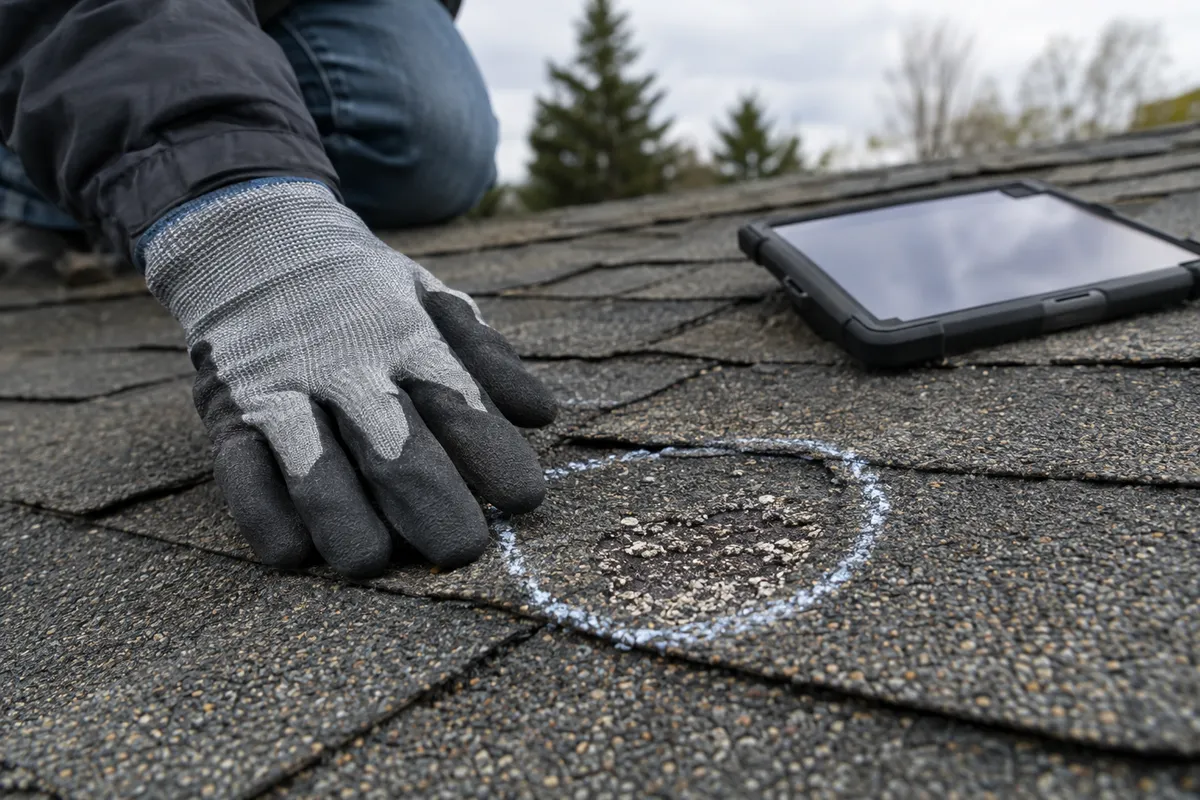
Hail is a good example of how exposed the peak is. The Insurance Institute for Business & Home Safety (IBHS), a research group funded by insurers, says in its hail damage brochure that ridge caps are among the most hail-vulnerable parts of a shingle roof. It also notes that real hail damage appears in a random pattern and that you can usually feel a bruise on a shingle that a hailstone struck.
On tile roofs the same pattern holds. The Florida Division of Emergency Management’s retrofit guide for tile roofs lists hip and ridge tiles among the most vulnerable parts, and notes that older mortar-attached tiles can be the first to blow off in gusts of roughly 80 to 90 mph. Most Northern Virginia homes have asphalt shingle roofs, but the lesson carries over: the peak is where an aging roof shows its age first.
Signs your ridge cap needs repair
You can see most early warning signs from the ground or from inside the attic, without climbing anything. GAF, a major shingle manufacturer, lists the general signs of roof damage on its homeowner education page: a leak in the attic, water stains on ceilings, decayed sheathing, cracked or curled shingles, and popped or rusted nails. It recommends spot-checking your roof once in spring and once in fall, attic included.
For the ridge specifically, look for:
- Missing caps. A visible gap or a darker, bare stretch along the peak line.
- Cracked or split caps. Caps crack along the bend as the asphalt ages and stiffens.
- Lifted or curling edges. The sealant strip has let go and wind is working the cap loose.
- Exposed or backed-out nails. Rust streaks or shiny nail heads along the ridge mean water has a direct path in.
- A wavy or sagging ridge line. This can point to a problem with the decking or framing below, not just the cap.
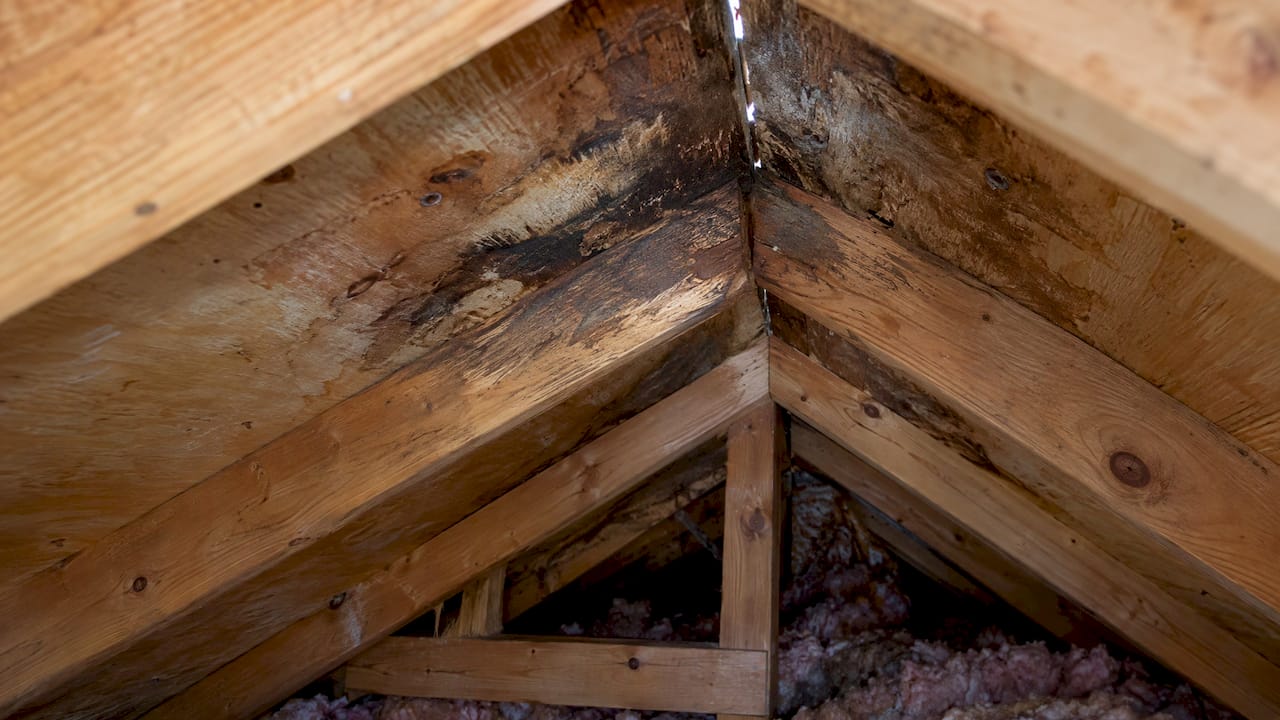
- Attic clues. Daylight at the peak, damp or dark sheathing near the ridge, rusty nail tips, frost in winter or a musty smell.
- Granules in the gutters. A lot of shingle grit near the downspouts suggests the roof surface is wearing out.
A pair of binoculars from the yard is enough for a first look. Our guide on spotting common roofing problems early walks through more of what to look for, and a seasonal roof maintenance checklist for Northern Virginia fits the twice-a-year rhythm GAF suggests. If you also look after rental or second properties, an autumn property maintenance checklist is a handy way to build roof checks into your routine.
Please stay off the roof. Wet shingles, steep pitch and a peak with nothing to hold onto make ridge inspection the riskiest part of any roof walk.
What causes ridge damage
Most ridge problems come from a short list of causes:
- Wind. Gusts and storms lift caps whose sealant has aged. Northern Virginia gets thunderstorms with strong straight-line winds, and a cap that was already loose is the first to go.
- Hail. The ridge is a high, raised edge that hailstones strike squarely, as the IBHS brochure notes.
- Age and heat. Caps are cut from the same asphalt as the rest of the roof, but they are bent sharply and sit in the hottest spot. They dry out, crack and lose granules sooner.
- Poor original installation. Too few nails, nails set too high or caps cut and bent badly all leave caps that fail early.
- Ventilation problems. Trapped heat and moisture age shingles from underneath. Owens Corning’s Roofers Guide describes a balanced system in which air enters at the eaves and exits at the peak, which protects shingles from heat aging.
- Settling or framing movement. Over decades, a ridge can sag and open the joints between caps.
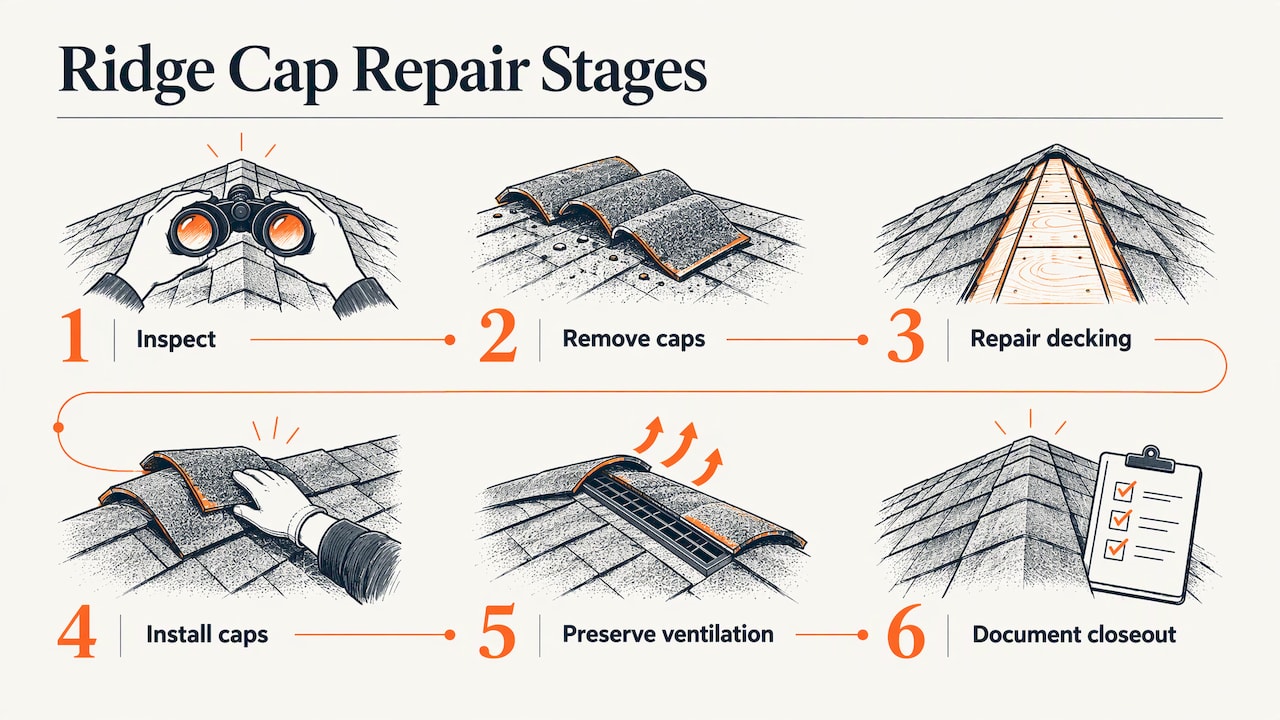
How ridge cap repair is done
A proper repair is simple in concept and precise in detail. Here is the sequence, and where it tends to go wrong.
1. Inspect and document the damage
The first job is to find out how far the problem goes. A cap that looks cracked may sit on dry, solid decking, or it may hide soaked sheathing. A good inspection covers the whole ridge, the vents, the flashing where the ridge meets walls or chimneys, and the attic underside. This is where our process starts: a free inspection with photos, so you see exactly what the roofer sees.
2. Remove the failed caps
Damaged caps come off along with every old nail. Leftover nails or fragments keep the new cap from lying flat, which creates a new gap for water. Neighboring caps that are intact can sometimes stay, but pulling their fasteners through the shingle ruins them.
3. Check and repair what is underneath
This is the step quick fixes skip. If the decking is stained, soft or rotted, it has to be replaced before new caps go on, or the new caps will be sitting on a failing base. Flashing and underlayment at the peak are checked at the same time.
4. Install new caps correctly
Ridge caps are fastened with nails placed where the manufacturer specifies, and covered by the next cap in line so no nail head is exposed. The cap type should suit the roof: standard caps for a plain ridge, vent-compatible caps where a ridge vent runs along the peak. Caps are laid starting from the end facing away from the prevailing wind, so wind blows over the overlaps rather than into them.
5. Handle the ventilation correctly
If the roof has a ridge vent, the repair must keep it working. The Master Craftsman installation manual, a widely used roofing reference, warns against mixing exhaust types: when ridge and soffit ventilation is installed, gable vents, roof louvers, turbines and power fans should be removed or blocked, because they shortcut the airflow and can let weather in. According to the Owens Corning guide, no more than 50% of the required ventilation should sit at the ridge, and intake at the soffits should at least equal the exhaust at the ridge.
6. Close out with documentation
You should end up with photos of the finished work and a clear record of what was changed. On our projects, work is documented before, during and after, with written change orders for anything that changes the scope, and a closeout that includes lien waivers and warranty delivery.

Why the work belongs to a trained crew
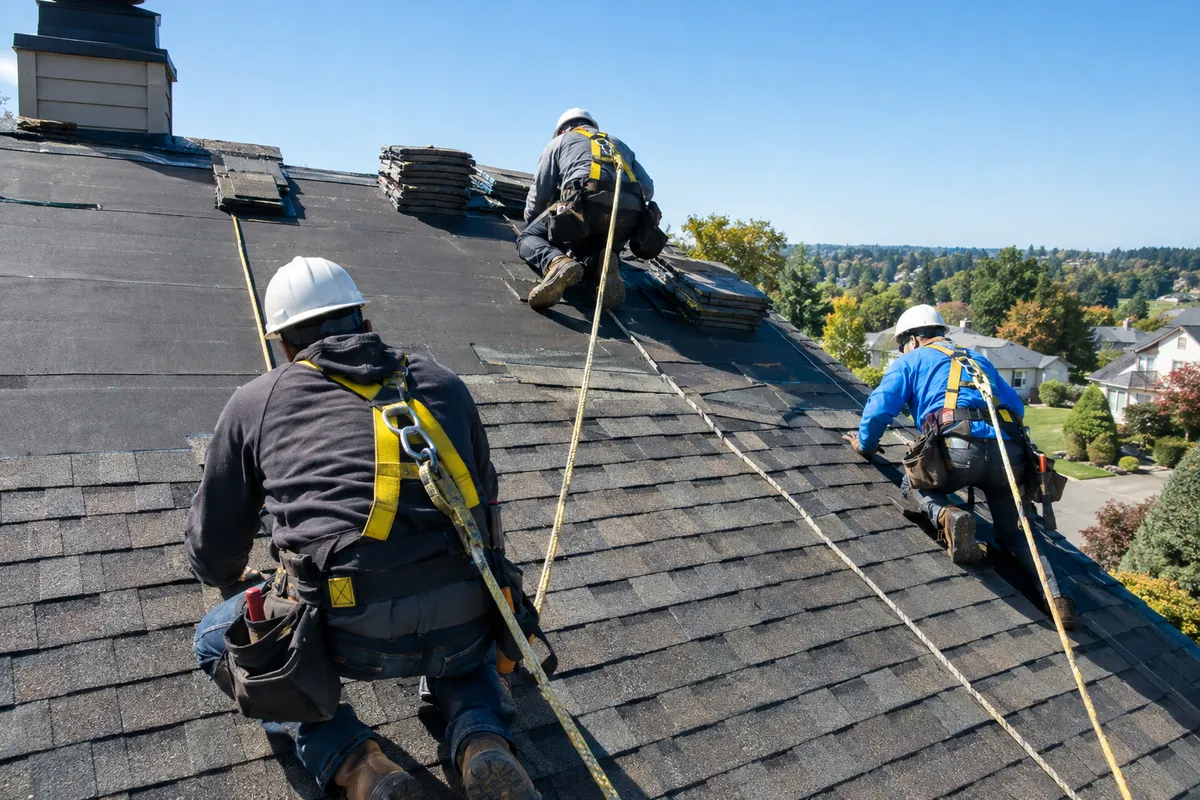
The ridge is the one spot on the roof where a small slip becomes a long fall. OSHA’s residential fall-protection standard, as summarized in the Master Craftsman manual, requires employees working six feet or more above a lower level to use guardrails, safety nets or personal fall arrest systems. Professional crews work with that equipment and training as the baseline. It is also why a ridge repair done from a ladder with a tube of sealant tends to be a stopgap: sealant smeared over a cracked cap hides the problem and does not fix the decking or fasteners.
There is a practical side too. Roofers deal with the full roof, not just the cap. They notice the soft spot in the decking, the lifted flashing and the vent that is not drawing air, and those are the details that decide whether a repair lasts.
Repair or replace: where the line falls
A ridge repair makes sense when the damage is contained:
- A handful of caps are cracked, lifted or missing.
- The decking under them is dry and solid.
- The rest of the roof is in good shape with years of life left.
A bigger scope is the better call when:
- Caps are cracking along most of the ridge, which suggests the whole roof is at the end of its life.
- Decking along the peak is wet, soft or rotted.
- The shingles on both slopes are curling, losing granules or leaking in other places.
- Repeated repairs on the same roof keep adding up.
Our article on roof replacement versus roof repair helps you weigh that decision, and the guide to shingle roof repair explains what can be fixed and when to replace. This is why we write proposals with good, better and best options: you can see the targeted repair next to the broader fix, and choose with the photos in front of you.
What affects the cost of ridge repair
Ridge repair prices vary by roof and region, so there is no single number to trust. The estimate you receive depends mainly on:
| Factor | Why it changes the price |
|---|---|
| Length of ridge affected | Work is usually priced by the linear foot of ridge, with a minimum charge for small jobs |
| Cap type | Standard caps, vent-compatible caps and tile or metal ridge pieces differ in material and labor |
| Ridge vent | Repairing or replacing a vent adds material and time |
| Decking condition | Replacing rotted sheathing adds both material and labor |
| Roof pitch and height | Steeper, taller roofs need more safety setup |
| Storm damage | Weather damage may also involve other parts of the roof and an insurance claim |
| Roof age and material | Older roofs may need matching materials or a wider repair |
When you compare quotes, ask each contractor to put the scope in writing: how many feet of ridge, what cap type, whether decking is included and what happens if rot is found. A written proposal with change orders keeps surprises off the final bill. Our guide on how to hire a roofer in Virginia covers license and contract checks to make before you sign.
If the ridge is leaking now
When water is coming in during or right after a storm, take these steps in order:
- Protect the inside. Move belongings, place buckets and photograph the stains and drips.
- Stay off the roof. Wet, windy or icy conditions make the peak dangerous.
- Report it. IBHS advises homeowners to report damage to their insurance agent or company immediately after severe weather and to make temporary repairs to prevent further damage. It also cautions against unsolicited offers to inspect or repair your roof, so work with a contractor you have chosen and verified.
- Get a temporary cover on. A properly installed tarp over the ridge buys time until a permanent repair. Our guide to emergency roof tarping explains what a good one involves.
- Plan the permanent fix. Our walkthrough of the first 48 hours after roof storm damage and the guide on storm damage and your insurance claim cover the steps from documentation to repair.
If you lose power, smell gas or see a ceiling sagging with water, leave that area and call emergency services before you call a roofer.
Keeping the ridge in good shape
A few habits reduce ridge damage over time:
- Check the roof from the ground and the attic every spring and fall, as GAF suggests.
- After a major wind or hail event, look for missing caps and have the roof inspected.
- Keep attic ventilation balanced, with intake at the eaves and exhaust at the peak, and do not add extra vents on top of a ridge system.
- Fix small problems early. A few lifted caps cost far less to address than wet decking.
- Keep gutters clear so water does not back up under the roof edge.
Our perspective
Most ridge repairs we are asked about started as something small: a missing cap, a line of rusty nails, a stain near the attic peak. The cap itself is rarely the whole story, which is why we begin with a photo-documented inspection that looks at the decking, vents and flashing around it.
We write the proposal with good, better and best options so a homeowner can see a targeted ridge repair next to a broader fix, and decide with the evidence in hand. Changes to the scope go in a written change order, and the work is documented before, during and after.
We close every job with lien waivers and warranty delivery, so you have the paperwork as well as the finished roof. For a ridge, that is the standard we think a homeowner should expect.
Esteam
Ridge repair from Esteam Roofer
We repair and replace roofs for homeowners across Northern Virginia, including Fairfax, Arlington, McLean, Oakton, North Springfield, Springfield and Centreville. Ridge work falls under our roof repair service, and a roof inspection is the right first step if you are not sure how far the damage goes. Both start with a free, photo-documented inspection and a written proposal.

If a storm caused the damage, our storm damage restoration service covers emergency repairs and the documentation your insurer will ask for. Contact us through esteamroofer.com to schedule your inspection.
FAQ
Can I fix a loose ridge cap myself?
The ridge is the highest and most exposed point of the roof, and fall-protection rules apply to workers at six feet and above for good reason. A cap that has come loose often means nails have backed out or the decking has moisture damage, which sealant alone will not solve. We recommend a documented inspection so the repair addresses the cause.
How long does a ridge cap repair take?
A contained repair of a few caps is usually a short job, often finished within a day depending on weather and access. Replacing rotted decking, repairing a ridge vent or addressing storm damage across the roof takes longer. Your written proposal should state the scope so you know what to expect.
Does insurance cover ridge cap damage?
Coverage depends on your policy and the cause. Sudden storm damage, such as wind or hail, is the kind of event homeowners usually report, while wear from age typically is not. IBHS advises reporting damage to your insurer right away, and our storm damage guide explains how to document it.
How do I know if a leak comes from the ridge?
Stains and dampness in the attic near the peak, rusty nail tips and daylight along the ridge line point to the ridge. Water can travel along rafters before it drips, so the ceiling stain is not always directly under the source. A photo-documented inspection traces the path back to its origin.
Sources
- How to Identify Roof Damage and What to Look For, GAF
- Is It Hail Damage? IBHS
- Hurricane Retrofit Guide: Tile Roofs, Florida Division of Emergency Management
- Owens Corning Roofers Guide
- Master Craftsman installation manual, sixteenth edition